Wednesday, December 6, 2023

Rhyme and Tide.

When I was a little boy, the world was a different place.

My late friend of fifty years, Fred, disagreed with me on this, but I think it was a better educated place. Maybe a smarter world. 


For instance, Life magazine, one of the best selling magazines of it day, once had an entire issue devoted to the Baltimore Colts football team with short funny poems of the type he was famous for by Ogden Nash. 

Nash also wrote this baseball poem. As a boy with pine-tar and horsehide in his veins, not ichor, it taught me a lot.
When my tilted New York neighborhood was making the shift from vinyl to cassette tapes, my father, for my tenth birthday bought me a small Bell & Howell cassette player/recorder. The first cassette I bought was of Ogden Nash reading his poems.

I loved poems like these. They've informed me for more than half a century, even if they ain't Elizabeth Barrett Browning or Gerald Manley Hopkins. They make me snort.

The turtle lives 'twixt plated decks
Which practically conceal its sex.
I think it clever of the turtle
In such a fix to be so fertile.

Adam
Had'em

My wife, who is also a copywriter and I were talking this morning. When both in a couple are copywriters, one or the other or both usually has a manifesto hanging over their Mac and screaming to be written. Writing a manifesto is a bit like visiting your in laws. Driving there, you don't want to be stuck in traffic. But you don't want to get there too fast, either.

Manifestos today are like old gum on the underside of seats in a decrepit movie theatre. They're everywhere. They're usually disgusting. And you need to wash your hands if you come into contact with one.


I mentioned to my wife, with more of a dose of my usual pedagogy, that the greatest manifesto I've ever heard was by 
W. H. Auden. A poem called "This is the Night Mail." It was later, in 1988, turned into an actual manifesto for British Rail.

During my last twenty years in the business, manifestos have proliferated even more rapidly than Starbucks or CVS drug stores. And most of them are as predictable as travel delays. They are meant to inspire and uplift--to get a viewers' ass lifted off her chair, but so many seem to be laden with baggage of every manifesto that ever went before. So it's uninteresting. Tired. Not inspired.

I remember once twenty-five years ago being with a bunch of fellow creatives and being dressed-down by our ECD, Chris Wall. I will never forget his two sentences of all-purpose creative guidance.

"I'm not pissed," he said, "that the work sucks. I'm pissed that our level of ambition has started to drop."

If you spend a minute thinking about that, you'll realize it's a lesson for the ages. Like wise people say about fishing, "The fishing's always good; it's the catching that varies." I think we should think somewhat the same about our efforts. "Our work varies, but our drive to do something special never changes."

Before I'd build a wall, I'd ask what I was walling in or walling out, as Robert Frost wrote.

Before I'd write a manifesto, an email, a banner ad, a blog post or a simple joke, I'd ask if someone had seen it before. If I had something to say. And if I said it in a memorable way that made a promise and asked the viewer to do something or made them feel something.

Really, the struggle of life is a struggle against boredom. It's not just an unexamined life that's not worth living; a boring one ain't worth much either.

For no particular reason other than I love it, I'll end with another poem, this time by a guy I know nothing about called David McCord. It's as deep as a well.

Epitaph on a Waiter

By and by
God caught his eye.

If you want to catch someone's eye--which is much of the purpose behind advertising and marketing communications, try something different, funny, rude, thoughtful.  Actually, that too would make a good epitath, maybe for me.

Epitaph on a George

 Different, funny, 
 Rude, thoughtful.

--


Tuesday, December 5, 2023

Yesterday. Today. Tomorrow.

It's a beautiful fall day, the day after Thanksgiving as I type this post. It's still not 'overcoat cold,' though it's late November. And some of the stouthearted denizens of the seaside town my wife and I bought a cottage in and then impoverished ourselves renovating have either the temerity or stupidity to walk around in shorts. 

To everything there is a season.
Except football and shortpants.


From about 1,200 AD to 1,850 AD, most of the recorded world endured a period that today we call 'The Little Ice Age.' Temperatures were colder than they were during the peak of Pax Romana (and maybe an underlying cause of Pax Romana.) Food was hard to grow. It was hard to stay alive. And most European forests were cut down for heating, building and shipping. 

It's thought by some (the rare historian who thinks in terms of millennia, not years, decades or even centuries) that the Little Ice Age spurred on the great period (or awful period) of global exploration. Mankind was looking for better places to live. When you're cold and your animals die and your crops won't grow and there's no water to drink, you migrate.

Think Genghis Khan. Or Atilla. Or Columbus.

Who knows what havoc will follow along in the wake of our current climate catastrophe. Such occurrences are impossible to foretell. But you can be sure nothing tomorrow will be like it is today.

Just now, returning from a four-mile seaside walk, the dying sea glimmering with life, my wife and I saw a disgusted neighbor doing what people do outside of the city. They have time in exurbia to do these things. After all, they're freed from fending off rabies-afflicted rodents the size of republicans congressmen and fund-raising congressmen the size of rodents. They rake free from leaves a world that wants to be full of leaves. 

Fallen leaves of our natural deciduous state. So of course we abjure it.

I had a professor in graduate school who asserted with a jocular seriousness that all of Western thought could be summed up by one line from the John Huston movie, "The African Queen," starring Katherine Hepburn (who lived about a mile from where I type this) and Humphrey Bogart. Bogart says to Hepburn, "Oh, Miss, that ain't natural." Hepburn replies, "Nature, Mr. Allnut, is what we all must rise above."

That's it, I said, when I heard that. My formal education is done. Between knowing that Shakespeare is about order and when kings are killed, chaos occurs, and mans' reputed dominion over the earth, as a scholar, you can bluff your way through anything.

Back to my raking neighbor, I said to him as he stopped to say 'hi,' "I hear next year, the leaves will be RFID-tagged and through the internet of leaves you'll be able to program them to rake themselves."

Like most people in dealing with me, he laughed through his nose while his eyes gave off a look of incomprehension, as in, 'what the fuck are you prattling on about?' Damned if I know would have been my response. But then I got to thinking.

Remember not too long ago how the internet of things was supposed to change everything by connecting 22 billion wireless devices from refrigerators to doorbells to refrigerators to washer-dryers to alarm systems to nose-hair-trimmers and more. This was supposed to give us power, control and convenience the aforementioned Romans could never have dreamed of. 

Vaclav Smil, in his book "How the World Really Works," said "...Within a lifetime of people born just after the Second World War the rate had more than tripled, from about 10 to 34 GJ [gigajoules]/capita between 1950 and 2020. Translating the last rate into more readily imaginable equivalents, it is as if an average Earthling has every year at their personal disposal about 800 kilograms (0.8 tons, or nearly six barrels) of crude oil, or about 1.5 tons of good bituminous coal. And when put in terms of physical labor, it is as if 60 adults would be working non-stop, day and night, for each average person;"

But, I asked myself, what happened to the Internet of Things? Has anything gotten easier? What's better today than it was yesterday? And if it is better--for a time or a moment--does its betterness compensate for the badness you feel when the wireless goes out because the power is out because the monopolies that control what used to be public trusts haven't invested in infrastructure since the first interstates were built. Does convenience 85% of the time make up for complete immobility 15% of the time? 

Who cares? 

Not the trillionaire monopolists, their billionaire board of directors, their multi-millionaire lawyers or their millionaire lobbyists. Or the millionaire politicians they bought at knock down prices.


Just now I saw some FCB-derived stunt on AI-assisted Pitch Decks. Oh, blow it out your Interpublicked-Ass, with your AI-Assistance. It takes you 12 weeks to produce a tweet for a client. AI-assist common sense, first. Then worry about chazarai.

Frankly, I'd rather have George Lois, dead one year, or Bill Bernbach, dead 41 years working on a pitch deck than any choreographed banality of ones and zeroes trying to be creative when they were born without creativity, the bastard, wicked spawn of boredom and impecunious.

There's an A/B test for living. I don't understand why more people don't adopt or even understand it .

Use it as a guide for client presentations, for creative, for copy and yes, when your AI-assisted Pitch Deck withers like donald drump's penis will in when wrapped inside an air-fryer inside a desert inside of hell.

  • What can I do better today than I could yesterday?
  • What can I do today that I couldn't do yesterday?
  • What tastes better today than it did yesterday?
  • What pollutes less today than it did yesterday?
  • What helps more people today than we could yesterday?
  • What delivers more now than it costs?
There's very little progress that I've seen that can close to answering those questions. Maybe we should stop trying to be cool by saying we've jumped on the latest over-inflated banal bandwagon.

And try to have an idea instead.
At the least try to make someone laugh, cry or think.

There are worser ways to end this than e.e.

anyone lived in a pretty how town

  • Share on Facebook
  • Share on Twitter
  • Share on Tumblr
  • View print mode

anyone lived in a pretty how town
(with up so floating many bells down)
spring summer autumn winter
he sang his didn’t he danced his did.

Women and men(both little and small)
cared for anyone not at all
they sowed their isn’t they reaped their same
sun moon stars rain

children guessed(but only a few
and down they forgot as up they grew
autumn winter spring summer)
that noone loved him more by more

when by now and tree by leaf
she laughed his joy she cried his grief
bird by snow and stir by still
anyone’s any was all to her

someones married their everyones
laughed their cryings and did their dance
(sleep wake hope and then)they
said their nevers they slept their dream

stars rain sun moon
(and only the snow can begin to explain
how children are apt to forget to remember
with up so floating many bells down)

one day anyone died i guess
(and noone stooped to kiss his face)
busy folk buried them side by side
little by little and was by was

all by all and deep by deep
and more by more they dream their sleep
noone and anyone earth by april
wish by spirit and if by yes.

Women and men(both dong and ding)
summer autumn winter spring
reaped their sowing and went their came
sun moon stars rain


Monday, December 4, 2023

Umwelt. And Neil Drossman. And Effective Advertising.

There's a centuries-old concept propagated by two German scientists, Jakob von Uexküll and Thomas A. Sebeok, called umwelt. The plural is umwelten. I learned about it from Pulitzer-Prize-winner Ed Yong's recent book "An Immense World." You can read the New York Times' review of Yong's book here. And you can order it from an independent book-seller here.

Umwelt has a complicated definition: "The biological foundations that lie at the very center of both communication and signification in the human and non-human animal." For my simple brain, I've simplified the definition to how animals, fish, birds, mammals, marsupials, bugs, etc. see and adapt to their surroundings so they can live.

You can try to think about unwelt based on a quotation attributed to German-born scientist Albert Einstein who reportedly said, “Everybody is a genius. But if you judge a fish by its ability to climb a tree, it will live its whole life believing that it is stupid.”

In their own environment, on their home turf, just about every creature is smarter than you or I. Sparkle, my puppy, is just eleven-weeks-old and has been living with us in Connecticut for just two weeks. Already she can navigate about her territory using her intelligent ears and nose. She senses things I never would in a million years. Same thing with the small fish swimming in the Long Island Sound not one-hundred yards from where I type this. They understand sounds, currents, patterns in the rocky bottom of the sea that make as much sense to me as Cuneiform. Here's a recent article that gives a good example of Umwelt in hairy-mouthed dolphins.

Now, as perhaps you've come to expect, there's an advertising point in all this.

Humans for too many millennia have been guilty of the citation above by Einstein. We judge fish, so to speak, by their ability to ride ten-speeds.

In advertising--where a premium is placed on youth and coolness--we often judge our audiences and depict them on their ability to thrive in Williamsburg, Brooklyn, or some other super-hipster environment. We seem to not take the time to understand or get to know the umwelt of the lives of our viewers.

Remember, we live in the fattest society in human history. Diseases of despair are epidemic. A sizable proportion of America lives veritably paycheck-to-paycheck. There are more gig-workers than ever, with the insecurity that comes from knowing that an app might tell you 'you have no work today.' Minimum wage doesn't pay a living wage. Most people have no financial provision for their old age. And millions have no health insurance or inadequate coverage.

Yet in the commercial, print or digital advertising worlds, everyone is smiling, high-fiving, dancing or about to. Nearly everyone, even the seriously ill in the blight of pharma ads we're subjected to teeters on the brink of euphoria. In technology ads shapely women lay on the floor with their laptops knees bent somehow typing. (Have you ever tried that? It's like a medieval torture.)

In short, in the commercial, print or digital advertising worlds, empathy, realism, love for the viewer have all but vanished. We create work based on the clients' needs or the needs of the Private-Equity-owned Awards-Industrial-Complex, not the needs of our viewers.

Last week the ad trade press covered the death at 83 of one of the great copywriters of the 70s, 80s, 90s, 00s, 10s and 20s, Neil Drossman. The great Lee Garfinkel wrote a memorial to Neil in Ad Age that because Ad Age is paywalled, I will paste it at the end of this post.

Neil, and so much of the great advertising of the past, show an understanding of the Umwelten of our viewers. Ads depicted a sense of reality. Reality is usually not-rose-colored and saccharine. 

There is sweat, pain, fear and overcoming adversity. Just as there is no true happiness without having had to overcome sadness, no highs without their companion-piece lows, no sunshine without the rain, there's no reality and truth in 99.7-percent of today's advertising because we have no understanding or honesty enough to show the full-spectrum of reality.

This ad below is one of Neil's, maybe is most famous.


This is one of Hall-of-Famer Mike Tesch's.


And one by Hall-of-Famer Ed McCabe's.


And here are a handful more written by Neil for Teacher's Scotch. The goal used to be to make advertising that was better, more fun, informative or interesting than the content around it. I remember sitting with my father, an inveterate New Yorker reader as he read every word of these aloud at breakfast one Sunday morning.

Oh yeah, I know. Nobody reads.

However, there are a lot of advertising and client big wigs who read this blog. I've got a freebie for you. You can pay me back with a nice assignment or an AOR engagement.

Become or hire an Umwelt agency.

Umwelt advertising isn't about awards, or even creativity.

It's about touching people.


REMEMBERING NEIL DROSSMAN, THE ADMAN'S ADMAN

Lee Garfinkel recalls famed copywriter's influence on advertising


By Lee Garfinkel. Published on November 30, 2023.


Neil Drossman wrote humorous, thought-provoking ad copy that is remembered decades later.


Copywriting legend Neil Drossman died Nov. 25 of cancer at age 83. Drossman, who began his career during the Mad Men era, first earned fame at Della Femina Travisano & Partners before going on to open a number of agencies bearing his name. Here, leading industry creative Lee Garfinkel writes about Drossman’s impact on the ad world and his own career.

Once I read Jerry Della Femina’s book, “From Those Wonderful Folks Who Gave You Pearl Harbor," I knew that I wanted to get into advertising.

After months of working on my portfolio, I decided to finally show my work around. I very naively decided to call Della Femina’s agency. And I remember the conversation I had with the receptionist.

“Hi, can I please speak with a creative director?”

“Which one?” she asked.

“Any of them would be fine.”

I don’t know if she laughed or not, but she did connect me with a creative director named Neil Drossman.

Little did I know that she not only connected me with a creative director, but she connected me with one of the best writers in the business.

Our conversation was short, but he agreed to look at my portfolio.

On the day of our meeting, I had two interviews lined up. One was with a well-known creative director from a big agency who hated my work.

The second was with Neil, who also didn’t like most of my ads. But Neil’s comments were the exact opposite of the first guy and I really liked his point of view.

Probably feeling sorry for me, Neil took a couple of award show books off his shelf to show me what good advertising looked like.

The books were filled with Neil’s ads.

Seeing his work transformed my views of what advertising could be. Each headline was smart, funny, insightful, unexpected and thought-provoking.

I didn’t know that advertising could be so clever and feel so fresh.

Neil’s Teacher’s Scotch ads written in the voice of famous comedians were simply brilliant. They were so good that people like Groucho Marx, Mel Brooks, Tommy Smothers and Zero Mostel never changed a line of Neil’s copy.

For Mel Brooks (dressed as a caveman holding a glass of scotch while sitting on boulders), Neil wrote “2,000 years ago when you had a scotch on the rocks, you really had a scotch on the rocks.”

For Groucho, Neil’s headline read “Whenever I think of Scotch, I recall the immortal words of my brother Harpo.”

The body copy for all of these ads was equally brilliant. Imagine long copy ads that people actually enjoyed reading.

Neil also wrote ingenious headlines for Emery Air Freight. Over a photo of the world-traveling Henry Kissinger exiting an airplane, Neil’s headline simply read, “Emery flies to more places than he does.” Another lesson learned. Using current events to make your advertising relevant and fresh.

When Purina introduced a new cat food called “Meow Mix,” Neil wrote the great tagline, “The Cat Food Cats Ask For By Name.” A turn of a phrase, a twist on a cliché, a wordplay, a pun. Neil could take anything and make it fresh and provocative.

His headline for Chemical Bank’s local branches read, “Flatbush Isn’t Flushing.” How do you read that headline and not want to read the body copy?

At the end of my interview with Neil, he said, “Now go home, write some more ads. When you have 12 that you like, come back and show them to me. If I like them, I’ll recommend you to a few people.”

That short time with Neil changed everything. It was the best advertising lesson I ever had. It changed my perception of what advertising could be and just as importantly, it gave me hope.

True to his word, Neil met with me again a few months later. He looked at my work and occasionally banged his fist on his desk. I realized much later on that when Neil banged his fist, it usually meant he liked something.

Finally, he closed my portfolio and said “Here’s a name. Call this guy.”

Luckily for me, that guy was the super talented John Russo. And thanks to Neil, John hired me at Levine, Huntley, Schmidt, Plapler and Beaver. Which was one of the best creative shops in New York.

Once I started working, I never stopped looking out for the latest Neil Drossman ad. The list of his groundbreaking work is limitless. 

One piece that many copywriters say is their favorite Neil ad is for Goodwill Industries. The visual shows a man in a wheelchair fixing a TV set. The headline reads, “What you see here is a TV set repairing a man.”

I always looked forward to his weekly Einstein Moomjy carpet store ads in the New York Times. Imagine looking forward to reading advertising? For a carpet store?

But that’s part of what made Neil’s work so special. It didn’t really feel like you were reading advertising. Neil’s work not only sold, it enticed and entertained you. His ads made you smile.

Once when I was at Lowe and Partners, I needed to hire a freelance writer. I called Neil who was working at his new agency, Ryan Drossman. Neil said as a partner in a new agency, he couldn’t freelance. So I did exactly what you would expect, I hired his entire agency.

Years later, when I was chairman of the Andy Awards, I asked Neil to be a judge. At the judges’ dinner, I thanked Neil for helping me out and for changing my life. He seemed a little shy and maybe perplexed by how important he was to me. 

Over the years, we had become friends and perhaps he even forgot about those first two times we met. Which in retrospect makes sense. Neil has helped and inspired so many great creative people, how could he possibly remember every person or moment.

But I for one, will always be thankful to this brilliant genius and the time he spent with a naïve guy from the Bronx.


Friday, December 1, 2023

In the Dark.

It was unusual for the Seraperos de Saltillo to have a practice at Estadio de Beisbol de Francisco I. Maduro during my one long season playing under the all-seeing and all-punishing Mexican sun in Saltillo, Coahuila, Mexico. But our losing ways had been losinger than usual and our manager, Hector Quetzacoatl Padilla, aka, Hector Quesadilla, thought it wise to try to correct some bad habits before they came worse habits.


Like me, el estadio was born old.

What's more, running a ball team, or dealing with a bunch of kids, or any group of people in an office, or a family vacation, is sometimes more about showing who's boss than having any real reason for doing something. You have to, at times, lay down the law if for no other reason that to slow humankind's inevitable and inexorable slide into entropy.

I can see my house from here.

In other words, Hector called practice this evening because too many of the Seraperos were doing things their way and not his way. Playing with their shirts untucked, with their sanitary hose down about their ankles, showing up late to the ballpark, or the worst sins of all in the deep eyes and unforgiving strictures of Hector, missing the cutoff man on a peg from the outfield, missing a sign, or bunting one into the air for an easy hip-pocket catch by the opposition's backstop.

We played continuously that summer. Often we averaged more than a game a day for a stretch of two weeks or three. "You don't make money if you don't fill the ballpark," I heard one official from the team mutter once, as we set off on our rickety team bus to play nine games in seven nights. And so, we played until we dropped and the we picked ourselves up and played some more.

As a consequence the chances we had to practice were limited usually to loose pepper before the game, some desultory batting practice, arm-strengthening long throwing, and routine shit, like shifting when a lefthander came up, or learning little niblicks of tricks like as you were running the bases, drawing a throw from the outfield so the lead runner could advance.


But this was a full-fledged practice after a twilight loss to the Olmecs or the Stevedores or the Pelicanos. This was a wind-sprint, puke on the warning-track kind of practice. Because Hector was mad.

He was mad at the nothingness of the team. The lack of bite and the lack of fight. He was mad that too many of the boys were just getting through the season, not fighting through the season. 

Hector, when he was a player, slid spikes out into second even if his team was down 13-2. There was no phoning it in in Hector's world. Baseball was a way away from the crushing horror of his childhood and giving up on baseball, even during a single, fleeting moment of lassitude, signaled a return to the pain of a father who hit you--and not with an open hand--and sleeping five to a mattress in a two-room wooden shack full of 
brothers and empty stomachs. 

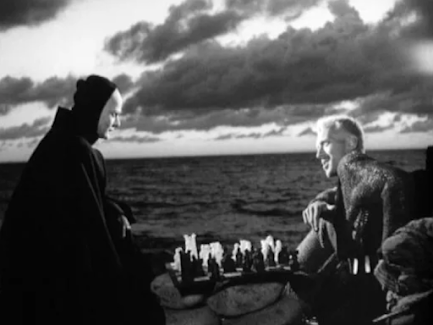
A life without heart or health or hope. A life of hell and helplessness. Baseball was the out from that, and Hector played every game like he was playing death in a Bergman movie and he was always one move behind.

We clambered into groups according to our positions. I was in with the "bend-over" infielders, the guys who had to crouch at the knees and bend at the waist to do their defensive job. The first basemen were off on their own, working with Gulliermo Sisto on their footwork and their scooping bad throws out of the dirt. Gordo Batista worked with our two catchers--getting them to stick their fat Indio asses almost onto the dust to block against passed balls, and then pop up like a child's toy to make the wicked peg to second.

The outfielders, five of them, practiced dumb stuff, like staying in the game not looking for pretty girls in the stands and hitting the cut off and backing up the one-over outfielder lest one bound past him. 

Hector was with us bend-overs, hitting us sharp grounders to our left or to our right, trying to get us to leap like Brooks Robinson to stab the ball before it could escape our clutches for extra bases. 

Hector was particularly angry at me that night. Earlier that day, a rocket shot by me and I reacted too slowly and tried to compensate by grabbing at it barehanded with my right hand because I was too molasses to dive and get it. From where the liner hit my hand, my hand was swollen like an overstuffed Cuban sandwich and it pulsated like a ringing telephone.

Then, at once, the lights in the decaying stadium went off. The stadium was supposed to be a showcase--a modern wonder of the baseballers' art. But by the time bribes and graft got done with it, half the wooden seats had no backs, half the stairways had no railings and the infield was covered in rocky littoral, not major league loam.

The lights went out because it was nine-o'clock and the grounds' crew turned the lights out and disappeared for the night. We breathed a breath of thank god and began to leave. But Hector stopped us.

The moon was bright and Hector gathered us in. "We will practice with our ears and not our eyes," he said. "We will hear what the wood says when it hits a ball. We will listen where the wind blows a fly ball and will sense the ca-bump of the enemy's spikes and calculate when we can throw him out or not. We will listen to the sound of the game."

Hector fungoed grounders to the infielders--hard, short, fast-bouncing hits to our right or to our left. He wanted us to learn, to be like Willie Mays and anticipate with 99.999% accuracy the vector of the ball before the ball itself even knew. The great ones, Hector said, could do so. Clemente, the Pirate of Pittsburgh. Mays, the Giant of San Francisco. Brooks, the
be-wingéd Oriole from Baltimore.

Like my own be-spikéd feet, the Serapero infielders had ears of clay. Once, only once, I dove to my left and heard a low grounder into my Rawlings 'Finest in the Field' glove. But that leather embossed slogan, like such much else that emanated from el Norte was a lie and an over-promise. I was not, and never would be the finest in the field, more apt, I was the fuck-up in the field.

I said to Hector across the infield in my bad high school Spanish, words I knew he might understand. "I am no Vayu," I barked as if talking to a bad dog, "I am no Vayu, the ancient god worshiped by the even more ancient Persians." 

"No se," Hector growled back.

"I am no Vayu," I said, echoing myself. "The vital breath of the world, is not the same as the vital breath in my human body. I am disconnect. Incongruity. Think left, go right."

Hector laughed at that. To me, Hector was an easy-laugh. Our senses were connected that way which is why he quickly became my first father and I his only son. Even when he was mad at me which was unusual, he loved me like my own father never did.

Orestes was born not with feet but with rockets.

"Cosmos and person are one in one person in ten million crowds of people. Perhaps Francisco I. Maduro himself had that vital breath, or Minoso of the Chicago pale hose who was never thrown out no matter how like a wild javelino he ran. But Porfirio Diaz gunned down the breath of the people and kept his kingdom of Mexico, as unvital as he was to anything but his own greed. And Minoso, black, was kept out too long because of white."

He shot another grounder my way and I fielded it in the dark cleanly across my body. I took two half Nijinski hops and zinged the ball across the infield to where the first basemen were but they did not see, hear or anticipate the sphere's arrival. It flew to Sisto's face through the dark and missed his prodigious beak only at the last minute, interrupted by the instincts of his hummingbird reflexes.

"Es totalmente," Hector shouted and we left the dark of the field for the gloom of the dripping locker-room. I stayed for a moment on the field and then lay on the dessicated grass between home and third. Hector lay down next to me and up at the lonely stars we stared.

"We are two people," the old man said in his mountain Spanish. "We are two people in one cosmos on one planet in one city in one stadium on one team. We are two people in one cosmos. We are not the vital breath of anything."

"Maybe because most nights we are too tired to even breathe" I answered.

We blinked against the blinking of the stars--more stars than the number of people at the most crowded of celestial ballparks. 

"We are not the vital breath of anything," Hector repeated and his growl of a voice reverberated from Alpha-Centauri back to me.

"Except each one of us is the vital breath to the other. Your breath is vital to my breath is vital to your breath" Hector ended.

"Each one of us vital to the other," the stars and I repeated.

We breathed and talked to the blinking stars without blinking. 

The stars were bright. The lights in el estadio stayed dark.  There was no sight to be seen and no seens to be sighted. Yet, ever-groping at the molecular darkness, we somehow found our way. We found a beacon, unblinking, in the dark.