Tuesday, December 14, 2021

A cross word for my readers.

For all the cruddiness of our modern era, there is also a jaw-dropping loveliness as well. 

About three years ago, through LinkedIn, a young woman who was friendly with my younger daughter when they were 'tweens started writing to me. She was hoping to get a job as a copywriter in advertising. 

She showed all the qualities of someone with her head planted the right way on her shoulders. She wrote a good note. She was always timely. And was funny. All that stuff matters.

Her name is Sara Muchnick and since those early notes, Sara's had a rare and enviable career trajectory. 


On occasion, when I'm lucky, Sara and I have a Zoomfee™.
It's good for all involved when young people and old people connect. Everybody learns and everybody profits. And along the way, we usually share a laugh or an idea or two.

A couple of weeks ago, the Sunday New York Times Magazine ran a crossword puzzle created by a young copywriter, at 215 McCann, Adam Wagner


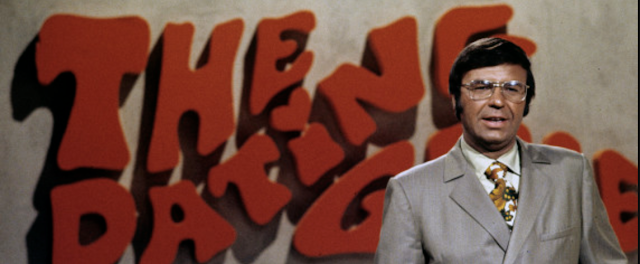
I knew Sara created puzzles, too. So I wound up introducing the two--like I was Jim Lang, host of the Dating Game. 

I proposed that Sara and Adam get together and create an advertising crossword for this dopey blog. 

Sunday night, I got a note from Sara. 

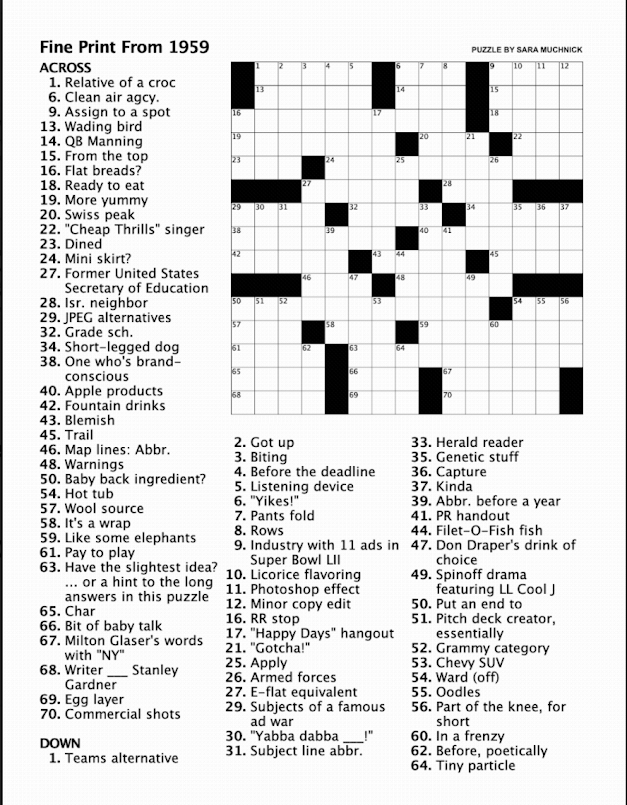
Like a lot of good writers, she went ahead and wrote a puzzle herself. No offense to Adam. Sara's bursting with ideas, energy and a conquer-the-world enthusiasm. She e'ed me an Ad Themed crossword, which I'm publishing here. You'll have to print this to fill it in. 
There's certainly no interactivity in this space.

There's one catch.

As there always is with me.

I'm not printing the answers.

Too many of you are cheaters.

If you want the answers, or if you want to meet a star in the industry, send Sara an email. Click here for her address and send her a note.

In my opinion, this is the way our industry is supposed to be. Fun people doing fun things. Helping each other. Sending the elevator back down.

BTW, the puzzle is called "FINE PRINT from 1959."

Enjoy. Good luck. And meet Sara. And say hi. And "help."


         Crossword "Fine Print from 1959©" by Sara Muchnick


Monday, December 13, 2021

The Nature of Work.

Sometimes, most times, we don't see what's right in front of us.

It's easy to miss the things that bring you joy and make you happy. I'm not talking about big things, like a big promotion, buying a new car, winning an award. Though there's elation that can come from those moments, happiness even, most people would be better-served finding different ways and different reasons to smile.


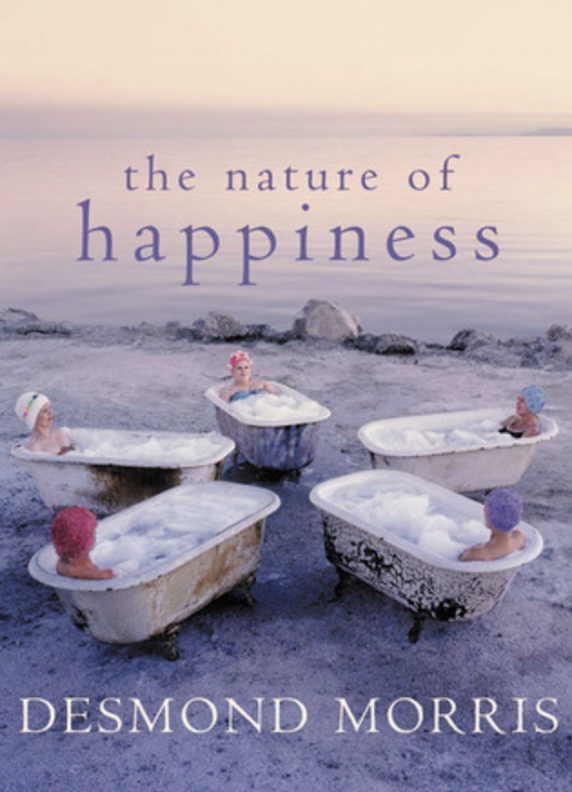
About two decades ago, I read a book, "The Nature of Happiness," by Desmond Morris. He's a biologist who specializes in mammalian behavior. Please forget how Hallmark the cover of the book looks. There's nothing bourgeoise or prosaic about Morris' thinking.

Morris tells how our ancestors, hundreds of thousands of years ago, hunted. Though it's not how we moderns today find food or sustenance, the evolutionary underpinnings of mammalian behavior haven't changed that much since we came down from our homes in trees, became bipedal and started hunting rather than scavenging.

We formed a group. We assumed roles. We chased and had our ups and downs. And we either completed or abandoned the hunt.

Morris' contention was simple. 

The act of the hunt gave us more meaning and happiness than the accomplishment of the hunt. In fact, after we killed the mammoth, the gazelle or the warthog, there was usually a bit of a let-down. 

Think about yourself. Sometimes the hunt for a rare book, movie, record album or interesting bottle of wine is more fortifying than actually finding it.

That's why today's current agency mania for awards--with more awards given out than there is good work produced and with the trumpeting of awards won supreme over the actual helping of clients--is so damaging. The happiness that comes from winning is the surge of the drug addict scoring a fix. You might feel good, but your body and soul are imbibing in ruination. You are filling an emptiness rather than accomplishing anything real.

My life as a solopreneur--that was a joke--is very different. First of all, I'm not really solo. I have an account person I work with, and very often an art partner. I also have relationships with clients like I've never had before. 

My Manichean dialectic essentially divides the world into two. 1) YOYO. You're on your own. And 2) WITT. We're in this together. My clients and associates WITT our ways through our days and nights. Or at least we half-WITT. But you get the point.

Currently, in one of my 64 side-projects I am working with some partners spread out over 7,000 miles or so, to create an advertising program.

We're planning a school. Not one that teaches how we do our work. But something more important: why we do our work. It's a class about the importance of advertising, what advertising can do, and the need to do it with vigor and creativity.

None of us are educators. 

We don't really know what we're doing.

But we have our El Dorado. And we know what we're aiming to do. 

Along the way, we're writing things down, figuring our roles, and moving ahead.

We're not much different from the aforementioned ancestors of ours chasing dangerous game. We get together about once a week. We talk, we think, we share, we bicker. We laugh.

Along the way, we notice things about ourselves. Little quirks. Little barbs. Little flashes of unexpected brilliance. All these things are not like winning the Titanium Pupik at Cannes. They are not brief and ephemeral. They go back to our evolutionary fiber--the code in our DNA that leads to meaning and fulfillment.

When I was at Ogilvy on IBM I had grown very close--as you'd expect I would--to three or four clients. They were demanding. At times we got frustrating and conflicting direction. At times we got too much direction.

But each of these clients hung in there. Explained the whys. And often, if you had to stay late to do something onerous and teetering on the capricious, they were there with you.

Every so often I would run into one of these clients in a non-work situation. In the Ogilvy cafeteria, poetically called, "Mouse Droppings." We would usually hug and smile. Many times they'd say to me, "We're sorry, George. You must hate us."

I always responded the same way because I value honesty. "I love you. You do what matters. You say please and thank you. And you're always appreciative."

It never ceases to amaze me seeing all the things companies do to allegedly make people feel good about being treated badly. Today, we have entire departments dedicated to the amelioration of misery. And none of that works.

If we're smart, however, we can be happy. We can find meaning. We can discover it's the little things that make us smile. It's feeling valued. It's feeling heard. It's getting support. It's being allowed to express anger. 

It's that WITT feeling.

That's what you get when you have some control over your own destiny and your own career. When the agency-broken relationship between hard-work and pay is restored. When people say please and thank you. When you can push back from your Mac and say, I did a good job on that.

That's what work is about.

Working. 

Doing good.

Being human.

Friday, December 10, 2021

Your next manifesto. I already wrote it.

Breathe in.

Breathe out.

Breathe sideways.

We've waited long enough and we won't wait any longer.

Our time has come.

Time to seize the day.

Time to change the world.

Time to change our shorts.

Time to stand up and say we will not sit down.

Time to shout, "we will not be quiet."

No.

Not us.

Not now.

Never.

We're the Generation that defies labels.

Call us "The Label Defying Generation."

Unlike all those generations before us, we hate to wait.

We despise lies.

We fight for what's right.

It's who we are.

It's whom we are.

Because we believe in direct objects.

Both directly and indirectly.

Like no other generation, we seek to make a difference.

In the world.

And out of it.


It's not enough to go green.

We want to go orange as well. 

And turquoise.

Yes, and plaid.

Because we've seen what humankind can do
when we join hands.

When we pull together.

When we join glands.

And get sent to HR.

Our time has come.

Time to start looking for stock footage.

Because today, tomorrow and tomorrow beyond tomorrow,
is yesterday's future.

And this is due

Today.


Thursday, December 9, 2021

Flaws. And space. (Inner.)

I am not a nerd, but I suppose since I read a lot and also read the forewords and afterwords of whatever I am reading, maybe I edging headlong into nerdom.

Yes. I read things even though I've been told ad stupidium that "nobody reads anymore." It baffles me how statements like this can be said and accepted and not questioned. But you'll hear it every day in agency-ville and client-town and most often, focus-group-shire. 

Not long ago, a very popular writer--one of those who was very rich and famous but who no one reads--died: John LeCarre. 

There are many people I know who spent much of the last 30 years or so waiting for the next LeCarre novel to come out like high school boys wait for their date's prom dress to come off. Presumably, they plan on diving into the event and enjoying themselves.

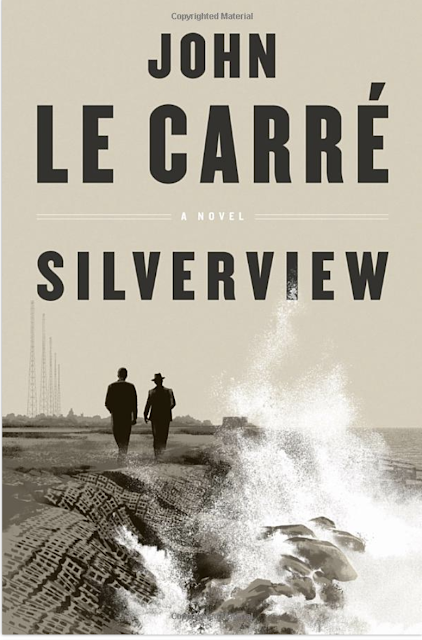
LeCarre published his latest book, "Silverview," posthumously. Many of my friends grabbed it practically while its digital ink was still wet. Though I seldom read fiction, LeCarre to my eyes reads like Graham Greene. He's someone you can read just to marvel at the power of his craft.


Some years ago my wife and I spent a few weeks in Italy. I don't play the violin, but we spent hours and hours in Cremona and Cremona's museum. That's the site of the Museo del Violino and it's the home of dozens of Guarneri and Stradivari. 

To my eyes, and the eyes of many others, those instruments represent the apotheosis of human craft. Sometimes it's good to see such things, if only to remind you what our dying species can accomplish when we're not building hypersonic weapons and weaponizing pathogens and ingesting horse medicine.

I finished Silverview in about two days and almost immediately called my ex-Ogilvy boss who is a LeCarre fan.

"Did you read Silverview," I asked.

"I finished it two weeks ago. The day it came out."

"Did you read Nick Cornwell's afterword?"

Nick Cornwell is LeCarre's son. LeCarre wrote under a nom de plume. (That means he says "nom" while eating plums.)

"No!"

Immediately, I sent my ex this passage by email. Almost as immediately he wrote back, "Holy shit."

"I was – am – ridiculously fortunate. When my father died, there was no outstanding business between us; no ill-chosen words or unresolved rows; no doubts and no misgivings. I loved him. He loved me. We knew each other, we were proud of one another. We made space for one another’s flaws and we had fun. You can’t ask for more."

When you get older--no matter how mild and moderate you are as a human--your mistakes, forced and unforced, add up like ashes in a crematorium. If you've been with someone for a while, a wife, a client, a daughter or two, a friend, a partner, you're bound to have tallies against your name in the hundreds.

Grantland Rice.

As Grantland Rice, the great sportswriter dittied,

"For when the One Great Scorer comes
To mark against your name,
He writes - not that you won or lost -
But HOW you played the Game."

Maybe these are reflections from a softer George as I celebrate my 64th journey around the sun and as we tiptop into another year on little cat's feet. Maybe this is a temporary chastened and more mild George. Maybe, my wife drugged my Tropicana this morning with more than the usual single dose of lithium.

But like the violins I mentioned above, it seems to me that the pinnacle of all all humans are looking for is just a breath. HR people call it "Work/Life" balance. Others are ready to trot out even more banal platitudes.

But working, living, co-existing, Nick Cornwell's summation of his time with his father hit home to me. 

I'll continue to be demanding.

Very demanding.

Of myself.

Of the people I employ.

Of my clients.

Of my wife.

My daughters.

The people I love.

And my friends.

But I will do better.

I'll try to make space for one another's flaws and try to have fun.

Wednesday, December 8, 2021

Connecting to smiles.

About 2200 years ago, in the first century BCE, the story goes, a non-Jew wanted to provoke the Jewish rabbinic sage Shammai. It's not hard to provoke a rabbi. When I was in Hebrew school, they yelled at me all the time. 

In any event, the non-Jew challenges Shammai to teach him the whole Torah--and while Shammai is standing on just one foot. Shammai isn't daunted by this. He rises to the challenge like applesauce piled high on a crisp latke.

Shammai answers, "That which is hateful to you, do not unto another. That is the whole Torah. The rest is commentary."

Alas, this space is not devoted to the theological or teleological. It's a blog about advertising, the English language and baseball, in roughly that order. So why am I talking about the Torah and Jewish law?

Simple.

The rest is commentary.

In the ever-increasingly complex world of advertising, there are legions of ad professionals with ever-tightening sphincters, who spout theory, trot out paradigms and Venn diagrams, and pontificate about all sorts of advertising models. These--this is pejorative--professionals, have all the answers. They can pomposify from early morning to late at night, through pages I to LXIII in the preamble to a 204-page powerpoint. They have theories on theories and feces on theses, and they exist mostly because the collected muckety-muckery in the ad business and the client-side are too cowed by their bullshit to say, "I think you're bullshitting." 

With apologies to Thorsten Veblen, I call it the "Leisure of the Theory Class," and it's done a lot to dismantle the credibility of our industry.

These bombasturators keep rising and rising until they go to the client side and use their vast intelligence to destroy whatever brand they're working for, simply because they can. 

Seriously, what does the Chief Brand Officer at a monopolistic drugstore chain do all day? Hmm. Hand-lotion. Let's sell more hand-lotion. I know! Buy one, get one!

But just recently I've seen two good spots.

In today's ad world that constitutes news. 

Two good spots on TV. 

That's as rare as finding a cucumber sandwich with the crusts removed at Katz's. 

The first is by my friend, Ken Marcus, a senior writer an ACD at this year's Adweek Agency of the Year, the Martin Agency. I don't really know how Geico does it. They sell insurance. And somehow they do advertising people actually like. Reductio ad absurdum, they actually like Geico, too.


The second is a three-minute long smile by, I assume, Media Arts Lab for Apple. I don't usually like three-minute spots. They're asking a lot of me. I don't have many three-minute stretches in my days where I'm not doing something I have to do for someone who's paying me.

If you believe in the economic theory of opportunity cost--Apple in asking for three minutes is asking me for a lot. I'm going to be pissed if they don't deliver.

But this is wonderful. 

I think even Old Man Potter might smile. And he's just a warped frustrated old man. Like me.


I'm sure these spots can be discussed, post-rationalized, pre-rationalized and simul-rationalized until hell freezes over or donald trump admits he lost the 2020 election by almost eight-million votes.

But 

There's no reason for all that.

They connect a brand to a selling point to a smile.

They connect a brand to a selling point to a smile.

They connect a brand to a selling point to a smile.

They connect a brand to a selling point to a smile.

They connect a brand to a selling point to a smile.

That's what we're supposed to be doing.

That's the whole purpose of our business.

Everything else is commentary.


Tuesday, December 7, 2021

Writing right.


As readers of this blog know, I am a fierce advocate for writing. While writing in advertising has fallen out of favor over the last two or three decades, and it's not unusual (in fact, it's usual) to hear CCOs and ECDs and account people and planners and media people and the cleaning crew that comes in at night and CMOs of Fortune 50 companies declare that, "no one reads," I refuse with the entirety of my heart to buy that assertion.

The very fact that this blog gets around 80,000 readers a week belies the notion of illiteracy. People ain't here for the centerfold. Or Mark Read featured in my annual swimsuit issue.

What's more, with some regularity, I create little all-type ads for my business, GeorgeCo., LLC, a Delaware Company. It happens with some regularity that these tiny little ad units get 50,000 or 100,000 views. These ads have no visuals, only type. Not because I hate visuals, but because my In-Design skills are rudimentary. I can create only the digital equivalent of the Lascaux cave drawings.

I remember many decades ago reading a short tribute to my then boss, the Hall of Fame art director Mike Tesch. Someone said in the piece something like, "Mike believes all marketing problems can be solved with a great :30 spot." His famous Federal Express spots demonstrated that, in spades. 

And not long ago, in conversation with my friend, Rob Schwartz, who is quite high up the extension ladder at the TBWA\Chiat\Day assemblage of Agencies of the Year, told me that his ex-boss, Lee Clow, had the habit of saying something like, "when you find a great writer, hire her. There just aren't many of them."

Suffice to say, I believe in writing.

In the power of words to make a difference.

In the power of simplifying complicated thoughts.

And reducing them epigrammatically so they, again in the words of Rob Schwartz, "live rent-free in our brains."

An ex-partner of mine used to say, "Everybody in advertising has a big butt." That is they say things like I'm saying here: "I believe in writing...but."

Yes, I believe in writing, but.

But most people do it badly and without thought, or worse, with too much thought.

Too much thought as in, "let's analyze a simple joke and poke and prod at it and wring it out and fold, spindle and mutilate it until it is a) no longer funny, or b) deemed somehow offensive, or c) so obvious as to be barbarous.

Somehow, we accept banalities. Half of LinkedIn and three-quarters of Twitter are retweeted platitudes that pass for wisdom. That's ok. We like that. Pablum becomes us. Bland doesn't offend. Pointed does.

For instance, if I wrote here this joke: "Did you hear about the pirate who got furious every time his ship floated away? He had Anchor Management issues," in short-order, I would get barbs from Pirates' Rights Advocates--"you're being unfair to an entire profession--some would say a societal cohort. What's next, will you make cannibal jokes? Not recognizing that regarding  cannibalism pejoratively is a western, colonial construct steeped in religious imperialism?" 

And then I would get attacked for mocking anger management. Yes, it is a serious problem for many--and I shouldn't deride it.

There's too much of shit like the above everywhere. 

Lighten the fuck up.

Finally, there is the too much writing of how people describe their jobs. Recently, I got a connection request on LinkedIn from someone whose appellation was listed as a "Growth Marketer."

It pushed me back in my Herman Miller and led to this long-winded blogpost.

Growth Marketer raises more questions than it answers.

1. Are they marketers whose job it is to preside over shrinkage? "My award-winning staff and I are charged with decreasing sales between 1.5 percent and 2.25 percent every year. We've had some slight setbacks lately, but we are working hard on reversing them into large setbacks."

2. Are they marketers of yeast or tumors or other kinds of growth, like pimples, boils, skin tags and belly fat.

If you're a marketer, just be a marketer.

Assume people know you're in it for growth.

OK.

Write less.

Communicate more.


Monday, December 6, 2021

The advertising holding company: A biological indictment.

Many years ago, before I was duly seduced by the fleshpots of Madison Avenue, I had set my myopic sights on an academic career. I had hoped to teach literature at some leafy college in New England, far away from Hardy's madding crowd and fully-ensconced in Harris tweed and the occasional co-ed.

Alas, like so many dreams of time and tide, this one was stillborn. But nonetheless, I have spent many of my nearly 64 years scaling the topless towers of the Western canon. 

Somewhat unexpectedly, as I peregrined my way through the Dewey decimal system, I found one of the great passages in all of literature not from Wharton, Melville, Dickenson or Faulkner--but from Dashiell Hammett, a comparatively low-brow author of what many from the hoity-toity side of the monorail would regard as pulp fiction. 

The Hammett I'm referring to comes from the chapter "G in the Air," from his masterpiece, "The Maltese Falcon." 

“Here’s what had happened to him [Flitcraft]. Going to lunch he passed an office-building that was being put up—just the skeleton. A beam or something fell eight or ten stories down and smacked the sidewalk alongside him. It brushed pretty close to him, but didn’t touch him, though a piece of the sidewalk was chipped off and flew up and hit his cheek.... 


"Flitcraft had been a good citizen and a good husband and father, not by any outer compulsion, but simply because he was a man who was most comfortable in step with his surroundings...


"Now a falling beam had shown him that life was fundamentally none of these things. He, the good citizen-husband-father, could be wiped out between office and restaurant by the accident of a falling beam. He knew then that men died at haphazard like that, and lived only while blind chance spared them. It was not, primarily, the injustice of it that disturbed him: he accepted that after the first shock. What disturbed him was the discovery that in sensibly ordering his affairs he had got out of step, and not into step, with life."

That's all a long--but I think necessary--prelude to the point of today's post. That the advertising industry has gotten itself out of step with the fundamental biological sensible-ness of the universe.


Here's the real topic today. Something I gleaned from reading Henry Gee's "A (Very) Short History of Life on Earth." Some might find the biological determinism of what's below refractory. But don't argue with me. It's been about 200,000 years in the making and our current a la mode of thought hasn't unraveled all of evolution, yet, despite all its attempts.

"A species in which babies are born utterly helpless and, even if born successfully—to mothers that stand a high risk of death—take many years to raise to maturity, is one that is likely to become extinct very quickly. The solution was a dramatic change—but at the other end of life... 

"Because females evolved menopause and lived longer.. The result was the introduction of a new stratum in hominin society—the Elders, of both sexes. Before the invention of writing, the Elders came to be valued as the repositories of knowledge, wisdom, history, and story. For the first time in evolution, there existed species in which knowledge could be transmitted across more than one generation at a time. 

"Many animals are capable of learning. Whales learn their songs from other whales; birds learn their songs from other birds; puppies learn the rules of play from other puppies; human babies learn language by the unconscious imitation of the humans around them. Humans are unique, as far as is known, in that they are the only animals that not only learn but also teach. The Elders made this possible. 


I read not long ago that the CEO of Dentsu International, I believe they sell steak knives on late-night TV, boasted that the median age in her agencies is just 27. Meaning there are as many people at Dentsu 27 and younger than there are over 27. (Median age in the US is currently about 39.)

At WPP, fewer than ten percent of employees are over 50. That's one in ten people in the world's largest advertising holding company over 50--as opposed to one in three Americans over 50 in the general population. So roughly 300 percent fewer 50+ people than demographics would indicate.

No wonder holding companies are suffering.

They've denied the value of the knowledge, wisdom, history, and story imparted by elders to youngers.

The role of Elders has been vital to the human species as long as we've been a species. But paying old people doesn't work economically any longer. Jonathan Swift in a Modest Proposal once suggested the poor should eat their young. It seems today's enlightened corporate executive is suggesting we eat our old. What else are they good for?

Yum. Panko-crusted copywriter in a light lemon sauce.

The industry is out of step, not in-step, with life itself. They're not valuing the role Elders have played for roughly 200,000 years.

Wendy, Mark, I dare you to respond.


Friday, December 3, 2021

Proving proof.

Some time ago, the more-than-brilliant Dave Dye--the blogger we all should be following--did something ballsy. Something that no other advertising person or agency would have the temerity to do. He devised an experiment--maybe unscientific--to discern whether or not advertising is actually worth the effort.

I find what Dave did amazing.

Stunning.

He found a local cheese shop in his neighborhood. It had some signage outside that he didn't like--and he asked the proprietors if he could use that sign as an experiment. To see if better art and copy would drive more foot-traffic.

The original signs looked like this:


In Dave's words: Jesus! Who could be arsed to read all those little words?’ Further: "Rather than deconstruct something in theory, maybe I can construct something in reality?"

Dave went to the owner of the cheese shop, "the client" and offered to see if he could make a difference in her store's business through better signage.

Here's some of what happened. Some of what Dave tried:


You can read more about Dave's experiments from Dave himself. Just click here.

However, my point today is not merely to fulsomely praise Dave.

It's to chastise the "deadness" of the modern advertising industry. The lack of bravery. The shortage of actual measurable belief in the efficacy of what we do. 

That's all fancy-schmancy for "putting our money where our mouth is."

As an industry, we talk about brand building and sales-igniting. Yet the industry does precious little of it for themselves. Sure, agencies post shit. 

But the operative word is shit.

And that which isn't shit is usually about as banal as a motivational poster from a North Korean re-education prison. Orwell as interpreted by Hallmark.

Very little of it contributes to the complex amalgam that is a viable brand.

We talk. But we don't put our own work to the test.

Can you imagine if you ran a holding company agency and were pitching a fast-food brand. What if you did something crazy like Dave did? Imagine opening your agency's branch of that brand with your agency's recommended advertising to see how many more people it brought in than that brand's current advertising. 

I remember when Scali won the Mercedes-Benz business back in 1991. The story was that one young account person from Scali personally visited each of Mercedes' 300 US dealerships.

Brands, Ogilvy used to tell us, don't care how much you know until they know how much you care. 

Care in extremis. As in putting your money where your mouth is.

Being kicked out of the business at the grey-haired and ossified age of 62 was--perhaps melodramatically--being served a career death sentence. 

I was independent, suddenly and all at once operating without all that shit agencies talk about:

  • Name recognition
  • Brand awareness
  • Unaided recall
  • Differentiation
  • Likeability
I was a dead man.

There are so many people who have won more awards than I--who were cheaper and cooler and cuter and easier to get along with. I realized all I had was my self and my brand.

Let me show the world I'm alive, I said. 

Let me show the world what I can do, I said.

Let me show the world my powerful, pointed and acerbic wit, I said.

Let me make me.

I started running little ads. Made to stand out on Linked In. Though I'm not an art-director, I realized that most headlines these days are set in 12-point type. Type that looks classy in a conference room. It's effete and looks like it hopped out of an awards book.

But I'm not effete. I don't have a beguilingly light touch.

I'm from the Bludgeon Academy. I made my headlines as big as I could. I wrote things I thought were biting, sharp, topical and funny. Sometimes arrogant. Sometimes self-effacing.

Like most things new, they started with a whimper, not a bang.

But like Dave Dye with his ads, I learned with mine. I gained followers like an evangelical preacher with a new blow-dryer. And earned, over the course of a year, about seven million free impressions. Not to mention resonance in the five measures I mentioned above. I became a name.

This is a lot for a Friday.

But I can sum it all up in a sentence or two. 

I'm doing well because I do good, truthful advertising. I run it often because it works.

I don't have an MBA.

But I have a feeling that those underscored lines directly above would put a lot of deckologists out of business. They're too simple for the ad world today. 

Thanks for reading words I consider good and truthful. Thanks for reading them almost as often as I write them.

You're why I write them.

Thank you.


Thursday, December 2, 2021

Winning for losing.


I was emailing with a friend who's a big fan of big-time college football. I've never been a fan of big-time college sports, for a number of punctilious ethical reasons.

One. I don't think a lot of the athletes are really going to school. I don't like the prevarications involved in the "student-athlete" moniker or the euphemism "college athletics." As I said above, I'm punctilious that way.

Two. Professional sports shouldn't get a free minor-league-system paid for by taxpayers. Not to mention billion-dollar stadiums. Not to mention coaches who make $20 million. 

Three. There's all too much money and gravity, period, being spent on kids' games.

Four. Drugs. Illicit recruitment. Brain damage.

But none of the above is really what today's blatherathon is about.

My friend and I were writing back-and-forth about what might be called the double-d's: The December Doldrums. We're at different points in our lives and in vastly different kinds of advertising jobs. But for whatever reason, we were both feeling it this morning.

It's not unusual to feel it.

As the kids say, the ad industry creates a lot of feels

The people who rise in it--who rise in any walk of life for that matter--are the people who have dived into the industry with both feet. They're the people who are neck-deep in the game, living and breathing the dormancy and the eruptions like a Vulcanologist at Pompeii. 

A lot of times I feel my heart rising in my throat and sitting there for hours at a time. Dread.

Most of that is neurosis--but while some people in the business can hide behind the "theory of the game" and bullshit their way to their next meeting armed with slick presentations that cost a lot and say virtually nothing--my friend and I are "deliverables" people. We make the things clients buy and our blood sweat toil and tears are personally interwoven in everything we do. 

None of that work comes easy.

No matter how "fast and facile" we seem.

That means at times, that your sanity--your grip on reality and on making a living--is under threat. It's like dinner time at my mother's house. Be careful.

It means a lot of bitten nails and an undue amount of "sheet-wear" from night after night visits from Dame Insomnia.

But back to football--where I started all this.

We exchanged some words about the game--and how much easier life would be if we could just stare catatonically at a giant screen and watch thyroid-cases pummel themselves into CTE, or degenerative brain disease. 

I said how much more placid it is rooting for "my" Columbia Lions. While they went 7-3 this year, they've gone many more years of 1-9 or 0-10 or 2-8. You know the outcome pretty much before kickoff.

I wrote a line that I said my father would say, about football and probably life and, of course, the December Doldrums.

"It's much easier being a fan of the Columbia Lions. 'Win or lose, they always lose.'"

Sometimes the business seems like that.

There's no winning for losing.

But you kibbitz with a pal. You hike up your pants. Pour yourself a cup of coffee. And you don't go gentle into that good timesheet.

I suppose once you know that no one gets off this rock alive, you've got a fair amount figured out.

Once you know this, you know how to play the game.

Win or lose, you keep fighting.