Monday, September 19, 2022

Co-Co a-Go-Go.

I've been in the advertising business 64 and 3/4 years or 42 years, depending on how you tally things. Because my father was in the business, I can rightfully say I grew up hearing the stories of the business and commercial breaks in my parents' tilted suburban home weren't times to grab a snack. They were times to listen up.

In fact, I was in two television commercials in 1962, as a platinum blond four-year-old. But the 42-year figure is the one I'll go with because that's when I started writing for a living. Or at least banging on a keyboard if you don't want to lower yourself and say that advertising writing is writing.

Counting that I've had 42 years in the business, I spent 39 of them not realizing one of the most important aspects of the business.

In my first agency job, my very wise partner, Craig said to me, you never stop working on your portfolio.

After 39 years in the business, I finally realized you never stop pitching.

Maybe, if you think about it, working on your portfolio and pitching are essentially one and the same.

What I mean is this:

Whether you're a giant advertising conglomerate or a one-person shop or you're working for somebody else's shop, you have to be on the hunt, always for business, whether it's new business or growth from existing clients.

It doesn't matter if you're already at your capacity. You have to be hunting for more. Simply because the more you do the more of a chance you have to do something great.

What's more, every post you make, every innocuous LinkedIn bon mot, is a prospecting call. Every phoneme you utter, every word you write, is a part of the composite that makes you. And you are always creating, always improving, always growing and always selling you.

I've always had a preference when it comes to the agency business. I hated agency names that tried to show how forceful and energetic they are. So names like Vector, Agitation and Spearhead, were never on my consideration list.

I've also always despised names that were meant to convey how unorthodox, quirky and creative places were. I dislike names like Purple Proboscis, Desiccated Piscine and Dangling Earlobe.

Finally, I'm offended by agencies that are named after people when they've done everything in their holding company's power to distance themselves from the founders' viewpoints and taste and ethics. Those agencies are too numerous, and it would be too impolitic for me to mention them all here. Besides you know who they are. They're all the big agencies, now smallerized via shareholder legerdemain. 

When I finally was forced into starting my own place having been fired for making Ogilvy too much money and doing work that was too well-liked by giant clients no longer considered cool in the new economy where social currency outweighs intrinsic value, a friend said "what will you call your agency?" 

I hadn't chosen a name, but in less time than it takes to fire a zip gun, I said, "GeorgeCo. Clients will come for me and clients will know they're getting me, not some ersatz GLO (George-like-object.)

Whether you're working for an agency or yourself you've got the same job.

You have to build YouCo. 

Every day, you have to build YouCo.

You build YouCo with your work ethic.

You build YouCo with your work.

You build YouCo with your network and your friends.

You build YouCo with your clients.

You build YouCo with your reputation.

You build YouCo every time you work with an editor, a sound guy, a photographer, a planner, a media person, an executive, a stranger.

Building YouCo, whether you know it or not is what you've been doing every day of your life.

Which brings me up to the very opening of this piece.

We're all working for YouCo.

Usually long before we learn it.

Learn it.


Friday, September 16, 2022

Un-Chain Store My Heart.

I just went to the drugstore twice. There and back twice.

I went to get a ton of incidentals for my Ted Talk in Lisbon.

Then I had to go back ten minutes later because the acne behind the counter forgot to put one of the items they charged me for in the bag.

Also, at the pharmacy, I waited watching six employees chat while I couldn't get their attention because their personal conversations are more pressing than customer service.


Of course, the pharmacy was a CVS. Nationwide, roughly one prescription in four is filled by CVS. They probably fill one prescription in two in New England. 

America loves free-enterprise. Until it interferes with monopolistic market-domination, money-making, lobbying congress with tens of millions of dollars and gouging customers.

This post isn't about CVS, however.

It's about advertising.

But I'm starting it per se with a question.

Does anyone anywhere like chain stores? Feel they're well-provided for and well-served?

Yes, I'm a Northeastern snob from a pre-chain-store generation. Republican jew-haters would call me a coastal elite. That's au courant code for Jew or Jew Boy, ie not "christian." (I won't capitalize that word because those so-call christians aren't.)

Back to my questions. 

Does anyone like chain stores?

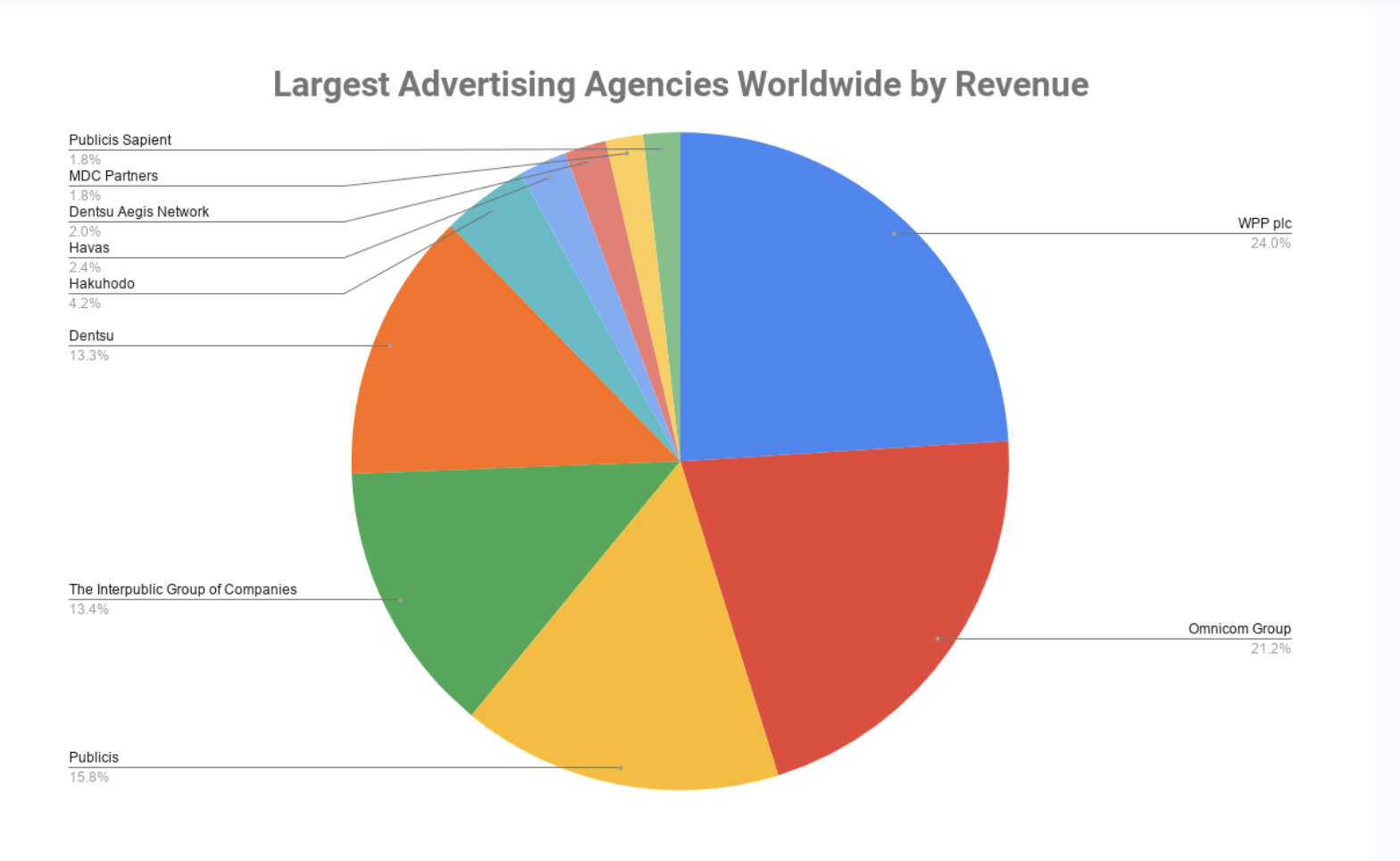
And does anyone realize that advertising, similar to drugstores, airlines, cable companies, phone companies, hardware stores, etc, are dominated by a few giant "chain stores."

In fact, because the price-of-entry is so steep, even America's politics is, essentially, dominated by two chains. The republican chain. And the democratic chain.

The best they can do is offer a lying, traitorous, philandering bankrupt or a 78-year-old man.

And what choice--beyond the above--do we have?

Advertising today is also a chain store business.

What do I see as the effects of chain store-ism? Due to a lack of a free market, consumers usually get:

1. Bad service.
2. Indolent workers.
3. Undifferentiated offerings.
4. Low-quality merchandise.
5. High-prices.
6. We're the only show in town-arrogance.

I don't know about you, but I feel dirty every time I shop in a chain store.

You can't very well avoid them, but I hate them. I feel ripped off and powerless.

I hate them even more when like CVS or the cable companies they show commercials that feature smiling employees and heart emojis.

It's a bit like when ad agencies say  they've been voted a "best place to work." And bury all data that might reveal they have a 49-percent attrition rate and 300 open hires in a 500-person office.

I think the world loses a lot when it buys into a chain or a conglomerate.

Mostly because you're dealing with 'employees,' not owners or founders.

There's a big difference.

I suppose this is a long-copy ad.


Thursday, September 15, 2022

A Pour Problem.

My wife, Laura, who's also a freelancer and I were talking. That
alone could be the start of a blogpost. I mean, after 38-years of marriage, who still talks to their spouse?

In any event, we were talking about how busy we are. In the five years of Laura's freelance she's scarcely ever had a day off. And in the almost three years since Ogilvy kicked me to the curb because I was making them too much money, most often I'm juggling between three or seven assignments a week. I think my revenue is at least two times or three times that of their New York office. But I don't want to jinx myself.

Either my wife or I was bemoaning the constant crush of the work pressure. I think I must have said something particularly Yiddish and lugubrious and Georgian, as if those three adjectives aren’t entirely synonymous.

"Well, it's better than the alternative." 

My wife said, "knock wood."

As I do, I corrected her. "Knock work," I said.

She laughed and repeated, "knock work."

As two-thirds of the industry seems to be unable to find people to work or keep the people they have and, conversely, everyone in a full-time advertising job seems abjectly miserable, I wondered what's wrong with us.

Why are the two of us busy and relatively happy when the industry's rule-of-thumb seems to be more-or-less opposite?

Then it hit me.

Laura and I are engaged in free-enterprise.

1. We set our own rates.

2. We choose our own clients.

3. The more we work, the more we get paid.

Sure, there are downward pressures on all three of those features. The market is marked by low rates--if we're to charge more we have to prove, daily, our worth. That's a challenge.

We can't be so picky with clients that we wind up idle. And we have to curb our work enthusiasm or we'll wither and die of a major infarction.

But the point remains.

In advertising days of yore, you gave up those three aspects of working in return for the appurtenances of agency life. The prestige of working for a big company. The regularity of a scheduled paycheck. Some benevolence on the part of your employer, where maybe you had some sort of security or pension as you aged.


Because you "got" those things, you could rationalize "giving up"
others. Something like above, which is a George chart, that is, it makes sense if you squint.

Of course, today, roughly seventy-percent of the advertising jobs at least in New York are under the stern and penny-pinching gaze of one of four or five global holding companies.

Just about everything in the "GOT" column above has been cost-consultanted out of efficacy's way. 

There are no appurtenances.

Last week, the conservative opinion writer for The New York Times wrote an essay called "The Immortal Awfulness of Open Plan Workplaces."

Open plan workplaces work as a metaphor for the impecuniousness I've described above. Brooks wrote, "For decades, research has found that open plan offices are bad for companies, bad for workers, bad for health and bad for morale. And yet they just won’t die. Human beings, if they are to thrive, need a bit of privacy — walls and a door. And yet employers, decade after decade, neglect to give workers what they need, refuse to do what’s in their own self-interest." And yet every holding company and every agency has glommed onto open plan workspaces as a shibboleth of acceptable meh.

Recently the New Yorker wrote, open plan workplaces “were damaging to the workers’ attention spans, productivity, creative thinking and satisfaction"...they led to "higher levels of stress, and lower levels of concentration and motivation.”

To my jaded and not-so-baby-blues, both these phenomena--the denial of "gots" and the propagation of open plan spaces have worked to destroy the industry.

The moguls will shake their well-coiffed heads. Linked In will be teeming with articles about quiet quitting. Agencies will offer employees $250 to buy a new yoga mat or a similar amount to create a video where employees spew banalities like "you can't pour from an empty cup."

That's true, you can't.

That doesn't mean anyone (besides you) will do anything to fill that cup.

Find a tap. 

I should say, find your tap.

Open.

Drink.

Repeat.


Wednesday, September 14, 2022

Now, Children.

I think very seriously about laughter.

I think very seriously about play. 

I think very often about an ad I read maybe 40 years ago by a very good agency that was subsumed and destroyed by the holding company that bought them.

The agency was Anderson Lembke. They were a business-to-business agency that understood--maybe better than anyone--how to take true complexity and make it sexy and simple.

I remember an ad they ran. They were looking for a copywriter.

It was a small-space ad. What used to be called "300 lines." About the size of an index card.

On the top of the ad in headline-sized type were the words "My Son." Then maybe 75 words of copy in smaller type. On the bottom of the ad in headline-sized type replicating the top were the words "A Copywriter."

The copy read something like this. (What follows is from memory.)

When my son was young he would draw trucks. Sometimes they would have five wheels. One red, one blue, one green, one black. One purple. As he grew older he learned that trucks had four wheels and they were all black. So he drew trucks that way. Anderson Lembke is looking for a copywriter who still draws trucks with purple wheels.

That's how I remember the copy. It was probably better than that. I likely butchered it.

But the point remains.

Children don't over-analyze things.

They laugh at surprises. And they create games. An ice cream stick can become a giant, a castle or a baseball bat.

Children know in many ways more about advertising than adults because they haven't yet been taught the utmost importance of gravity. They know they have hours in their day and they choose to fill them with surprises, imagination, laughter and thinking.

We have hours in our days and we choose to fill them with PowerPoint, meetings, long-winded preambles and 16-digit job codes.

My wife just showed me this film of Alexander Calder playing with his famous Circus. It was played on a continuous loop at the Whitney Museum when it was on Madison Avenue in Manhattan.

That's not a 70-year-old man in the grainy film above. It's a little boy. The music you hear is what's in his mind. The hopping of the ringmaster is how toys walk.

In our industry's MBA-inspired, holding company quest to be taken seriously, we've forgotten what makes us different is our capacity for silliness, irreverence, imagination.

There are billions of smart people in the world.

Brains are a dime a dozen.

But making people laugh, wonder, crave through unjaded eyes is what advertising can do.


I was thinking just before I wrote this post of the first joke I ever heard or read. I was probably in Kindergarten and it was probably from the book above.

I remember the joke.

Q. "What's black-and-white and red all over?"

A.  A newspaper.

I remember as a four-year-old the spark of cognition when I understood the word "red" had been fucked with. That wordplay help my brain grow. It made me smile. It made me run and tell someone. It made me feel smart. That I "got" something.

I think as humans we have retreated at supersonic speed from the joy of joke. The happiness of ha. The light of learning.

That's what children have.

When they're lucky.

Advertising can do that for masses of people.

If we teach ourselves again.

If we let ourselves again.

I hope I made you think today.

And laugh.


Tuesday, September 13, 2022

The Power of Positive Dumbness.

Many years ago, decades actually, I shot a direct response commercial for IBM. 

This was so long ago, giant companies still believed they actually had to sell things rather than just show generic footage of impossibly thin people from the fattest civilization on earth and close with "IBM. This is how we 'puter."

Oddly enough, in my spots (I had shot a package of eleven) there was no one in the entire :30 seconds who spontaneously started dancing, much less spinning in a field grass. 

One particular commercial was for IBM's lightest, smallest ThinkPad. The kind of PC business travelers use. So we featured an actor dressed up as a pilot describing the details of the machine. Stuff like, "On your left, you'll see two USB ports and on your right,..."

When I showed the rough-cut to Steve Hayden, who was leading the IBM account at the time, he laughed. I remember what he said to me: "That is profoundly, profoundly dumb."

I received that as about the highest praise one creative can bestow upon another.

The fact is I often look at the video above to calm myself down. Picasso's painting, you could say, is profoundly dumb. He transforms art to its most reductive, to its most simple. There is nothing elegant or high-falutin' going on here. Just a message of human universality that even Ayn Rand could accept.

As I round into my third year of running GeorgeCo., LLC, a Delaware Company, one of my "best practices" is to run ads for myself. 

999 out of 1000 ad agencies have so little belief in the efficacy of our profession that they don't advertise. I run about three ads a week on LinkedIn and usually get on the order of 25,000 views each.

Because, somehow, I've built a network of about 20,000 people on LinkedIn, this effort, except for my brain-power expended is free. That is, it costs me nothing but the energy to come up with about eight 

From those, say 75,000 views a week, I might get ten new connections, five inquiries, and one new piece of business. You don't have to be Gottfried Leibniz to understand the efficacy of that calculus.

For about the last week--because I have so much hanging over my head including a Ted Talk to deliver in Lisbon, Portugal, I've been in a bit of an ad slump. I haven't run a good ad for GeorgeCo in a while. I feel the pressure. I never liked the idea of falling off a horse and not getting right back on.

Earlier, I was on Twitter for a moment and tweeted a response to a tweet from Dave Trott that I thought was funny. Three synapses later I said, "that would make a good ad." Six minutes later I had posted it.

A few hours later, I had five thousand of response. And a dozen from the sort of people who tend to hire GeorgeCo., LLC, a Delaware Company.

Of course, being me, I rebuked myself for the dumbness of the ad above. It says nothing about who GeorgeCo is and how we think, or even what kind of clients we work with.

In fact, it's just a gag.

It might be a pun. That form of humor now nearly completely banished from advertising, though puns almost always make people laugh. As writer Eve Babitz once said, "Any man who cannot resist a pun will never lie up-pun me."

But all of that's ok.

My little ad made a lot of people smile. Maybe it earned a laugh or two. Maybe someone said, 'fuckin' George. He's funny."

Sometimes that's enough for an ad or an agency.

An ad doesn't have to be profound.

Just like your best friend doesn't always have to be wise.

Sometimes a smile is enough.
😀


Monday, September 12, 2022

When the Hurly Burly's Done.


I read something not long ago from the Pulitzer-Prize winning historian, Barbara Tuchman.

Great historians do more than retell the events of humankind. They do more than recite dates and tectonic movements of peoples and recreate the ins-and-outs of the gruesome battles that mark our species' time on this dying planet.


Great historians are like giant brains.


And giant brains, like giant super-computers and giant AI systems aren't magic. They're pattern-matching machines.


They can see something that happens. Something strange, unusual and never-before and they can say, "That reminds me of..."


They can explain why it reminds them of something else. And explain the comparison in such a way that you, too, understand something you might not have understood before.


[BTW, good advertising people and good designers can do this too. They can look at a new technology and say, that reminds me of what DDB did for Orbach's, who faced a similar issue. Finding patterns is how humanity thinks, learns and--if you agree we are progressing--progresses.]


Back to Barbara Tuchman, not long ago, I read a single sentence by her. It came to my mind as I read about Queen Elizabeth dying.


The sentence is: "The persistence of the normal is strong."


This might be blasphemous to those who believe in things like the royal family, but the Queen, like all the Princes, Earls, Lords, Dukes and other purple foofaraw is an anachronism.


Whatever human need initially formed "royalty," that need is answered by other institutions and other beliefs today.


But millions, maybe billions of people will mourn the Queen's death. Because the persistence of the normal is strong. And the Queen and royalty has been normal for all of our lifetimes and for literally thousands of years.


A lot of our world today forgets about the persistence of the normal.


We forget how enduring enduring is.


Those of us in advertising often babble on about the importance of the word "new." Put "new" in a headline and readership goes up. Put "new" on a bottle of furniture polish and sales improve. Add new colors to an old house, and 'poof,' a refresh.


New is news.


But old is stable.


For most of the Queen's lifetime, the world has been in the thrall of new. In fact, I was born in 1957 and I'm older than 110 of the world's 192 recognized countries.


That's a lot of new.


And it shakes people.


That's what's going on in America right now.


The newness, the lack of persistence of "normal" is scaring the crap out of people.


Again, in my lifetime, Black people got the right to vote, America lost its economic and military hegemony, gender became fluid, schools became integrated, gasoline became expensive, news came from thousands of sources. The very climate of our planet has changed. And on and on.


Like I said, that's a lot of new.


It scares the crap out of people.


People who often prefer the persistence of the normal, whether that normal is good or bad.


That's why England had a Queen.


She didn't do much.


But she was the normal.


She was like a tide.


She was always there.


We need to think about the feelings so many have of having the rug pulled out from under us.


The great advertising person Carl Ally used to say, "Advertising should afflict the comfortable and comfort the afflicted."


I think "new" afflicts the comfortable. It makes you reject the past, the status quo.


That's why we want the new iPhone before the old iPhone is hardly out of the box. 

That's FOMO.


But more scary is FOTA. Fear of taking away.


I think now, there are a lot of afflicted who need comforting. They don't know what's next or why or where it's coming from or if it's good or bad, what it will cost, how long it will last or if it will hurt. They don't know if it's fair.

When the persistence of the normal becomes abnormal, that's MacBethian.

Fair is foul and foul is fair. The world is topsy turvy. And the hurly burly is never done.


I think maybe people, and brands, should think about that.


Friday, September 9, 2022

The Quotable.


Much of what I see on social media seems to consist of platitudes, obviousisms or banalities. 

To be fair, social media for me is really only LinkedIn and Twitter. I left Facebook because of their support for hate, racism and fascism--and their lies. I never joined Instagram and refuse to even consider submitting myself to a Chinese/Surveillance-state platform like Tik Tok.

Nevertheless, who am I, a lowly blogger to swim against the current? 

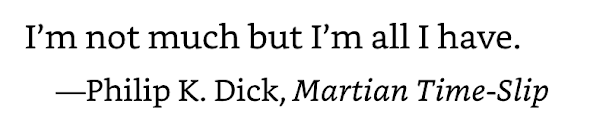
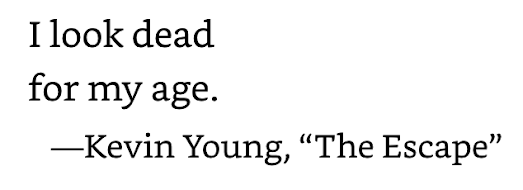
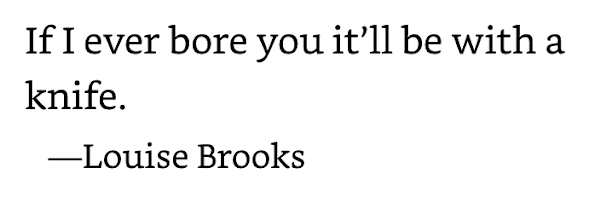
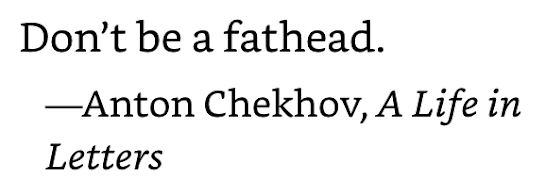
In fact, not long ago, I read Dwight Garner's wonderful, quirky selection of quotations pictured above. Garner's collection is excellent. If you're ever "stuck," in need of an idea, or just want a laugh or something to think about, you could do worse than buying yourself a copy. Here's an essay by Garner on his collection.

And here's a short story by me, and about me punctuated with just a smattering of my favorite quotations chosen from Garner's eclectic and voracious reading.

---
George is a genial enough guy. 

He was good at many things, but especially at rubbing people the wrong way. Backed into a corner, George might cry,


George consoled himself with his usual solipsistic pep talk. 'No one's perfect,' he'd mumble to himself. 'Besides, 

So, George trudged ahead. Never resting. Like a soldier on a death march. Or a marathoner. Or someone walking to pay his overdue taxes. Trudging. Trudging. Trudging. Never letting up. Over the years, the relentless press, the un-ending effort wore George down. One foot in front of the other. Again and again. Inexorably.

It was small consolation but George said...
but at least I'm alive. It's better to die a washed-up corpse than a fresh corpse.

"That's about the stupidest thing I've ever heard," said Laura, George's wife, as she was watching him type.

"You know," George barked, "your constant imprecations are wearing on me. In fact, they're boring me."

Laura, as feisty as an underfed boxer came back at her husband, saying,
"What's more," she added, 

They ended there. But secretly George hoped that,


Thursday, September 8, 2022

My Daughter Meets Ernest.


When my older daughter was about four or five she came to me with a huge four-or five-year-old's problem. It was summer and we were sending her to a sylvan day camp in the country far away from the bubbling asphalt streets of Manhattan.

[As an aside, the smell that evokes summer in my mind is the stench of boiling tar or asphalt. Back when the rich paid taxes, the city would always redo the streets when the weather got warm. Where some kids have the smells of fresh-cut grass to remind them of carefree, school-less days, I always recall the hairy arms of broad Italian men in sleeveless t-shirts, shoveling asphalt into potholes in the Bronx.]

Back to my daughter. She came to me on the precipice of tears. 

"Dad, tomorrow I have to take the "A-water test," to get in the highest swimming group. It's seven laps (that seemed to Sarah a channel-crossing). I'm not sure I can do it."

"You don't have to swim seven laps," I told her.

"No, Dad," she told me. She was always good--she is to this day--at correcting me and putting me in my place. "I have to swim seven laps."

"Sarah, you have to swim one lap. Then you have to say to yourself, 'I swam one lap. Now I have one more to swim.' And swim that lap. Don't think about swimming seven laps. That will intimidate you. Think about swimming one lap at a time until you get through your seven laps."

That seven laps of conversation took place about thirty years ago, and there's hardly a day that goes by when I don't think about it.

Right now, I'm emailing with a friend. She's a very good writer--the kind of writer whose writing is so good it scares other writers--and she is taking the long day's journey into beginning a blog.

Naturally, she's scared. 

She's afraid of having to swim all seven laps.

The thing about anything you pursue is not to make yourself anything special out of the box. If you're a writer, don't try to be Melville or Faulkner or Virginia Wolff or anyone. 

If you're a ballplayer, forget about being Christy Mathewson or Hank Greenberg.

If you're a painter, dispense with notions of Van Gogh or Rembrandt or even Jackson Pollack. 

Just be you.

In some cultures, like some of the first peoples in Alaska, everyone carves scrimshaw and makes small sculptures of seals and other local flora and fauna. There aren't specialists. The level of artistry is well and widely distributed. And everyone does their own thing, as they can. Everyone brings their world view into focus in whatever they're working on.

I think the trick to accomplishing anything, to pinning your name on anything that might, someday, somehow achieve wider recognition, is not to strive for that recognition. Instead, strive to make your art, or your tennis game, or your spaghetti carbonera, quotidian. Make it something you do every day and leave it at that.

I grew up a deprived child. 

With a mentally-ill and borderline mother. And a heart-diseased, missing and drunken father. In the seventeen years I was under their tilted roof until I ran away to play ball in the Mexican Baseball League, barely a kind or encouraging word was ever exchanged. When someone is kind to me today, so many years later, I look at them like a raccoon cornered. I'm sure they're trying to hurt me somehow.

Yet, when it came to be my turn as a father, I had practiced learning a loving-kindness as well as I could under my circumstances. I practiced hearing what my daughter was afraid of and I thought what I might have liked to have heard when I was a tender age and also afraid.

I thought about that and I told Sarah to swim just one lap at a time.

I'm almost 65 now. 

I am still almost daily afraid of something, though I have nothing, really, substantial to be afraid of. My health is good--except for my arthritis, my insomnia, my torn right rotator cuff and my losing battles with depression. My business is going better than it has any legitimate right to be going. But none of that means I'm not afraid.

I still do that simple job I described to Sarah so many decades ago. Whether it's the miles I have to go when I am exercising or the ads and assignments I have to create when I'm on deadline.

I do one lap at a time.

And then I do another.

That's all I can do.

And all there is to do.

--


Or, as written by a very-young Hemingway and published in a collection called "The Nick Adams Stories," 

“He had already learned there was only one day at a time
and that is was always the day you were in. It would be today
until it was tonight and tomorrow would be today again. This was the main thing he had learned so far.”

It's easy to mock Hemingway.
It's harder to ignore him.


Wednesday, September 7, 2022

One Thousand and One Nights.

One thousand and one days ago, I closed all three rings on my Apple watch. 


Since then I've closed all three rings one-thousand days in a row. 

No, it's not like running the Leadville Trail 100, hiking the Appalachian Trail or climbing El Capitan. But it does entail walking or running about 50 miles a week and taking a weekly total of about 100,000 steps. Or seven miles every day and 14,000 steps.

I've done that in sickness or in health, every day since December 12th, 2019. December 11th was the only day in my 12 years at Ogilvy that I ever called in sick. I've walked through airports, between client meetings, before, during and after pitches. In rain, sleet, snow and ice. 

Truth be told, my Borscht-thick blood actually prefers rain, sleet, snow and ice.

Unlike Rich Siegel of Round Seventeen renown, I am still Gargantuan, roughly the size and avoirdupois of the old TV-star, Mr. Ed. But my blood sugar is low, my blood pressure is good and my pulse-rate is about twenty ticks a minute slower than a normal American male approaching 65. Plus, without telling me, my wife has replaced all my clothing and belts with exact replicas a couple sizes larger than I had had. Everything seems a little looser than in days gone by.

The point here today is something I've grown into.

Discipline.

Or, perhaps to be grandiose about it and use the words of Viktor Frankl, finding meaning.

Meaning--regardless of who you are--comes down to something simple. It's doing things that are good for you even when it hurts to do them. It's doing things that matter. 

Maybe especially when it hurts to do them. When it would be easier not to do them. When everyone else is may be phoning it in and posing on Instagram.

Meaning is the purpose of doing things you believe in. It doesn't have to capture carbon or solve the world's problems. It could be giving your kids a chance you never had. It could be saying no when it's simpler to just nod in agreement.

Meaning takes discipline.

That doesn't mean it always makes sense or is reasonable.

Viktor Frankl for instance. He survived three years in Nazi death camps. Parts of two years in Theresienstadt where he saw his father starve to death. Parts of two in Auschwitz, where his mother and brother were murdered in the gas chambers. And, by application, one in Bergen-Belsen where his wife was murdered, dying from typhus.

All the time Frankl was imprisoned in various Nazi murder centers, he did something stupid.

He combed his hair. Every day.

Even when he was shorn by the Nazis. 

Meaning, to Frankl said, you do things for yourself, even when it might seem better not to. Or, certainly easier to skip.

But Frankl found meaning, humanity, himself--even, yes, dignity in keeping his discipline and structure even while imprisoned in a death camp.

I find the same--meaning, humanity, dignity--in writing every day and exercising every day.

Yes, I'm allowed to relent. But I find more purpose in keeping on.


On Labor Day, Peter Coy, an opinion writer for the New York Times wrote an essay, appropriately enough on "labor." 

In it, he asks a simple question.

Is work intrinsically good? Or is it just tedium?


In Proverbs in the Jewish Bible, we're told, "In all labor there is profit." In 2018, anthropologist and author of "Bullshit Jobs," David Graeber asks, "how have so many humans reached the point where they accept that even miserable, unnecessary work is actually morally superior to no work at all?”

Coy writes, "last week I read a smart piece...that I think answers Graeber's valid question."

"Human beings evolved in societies that valued cooperation... People who work hard tend to be team players. So working hard in primitive societies was a costly but effective way of signaling one’s trustworthiness. As a result, our brains today are wired to perceive effort as evidence of morality...displays of effort, including economically unnecessary effort, may serve a similar function.”

There's no real reason I've exercised every day for 1,000 days. No real reason I haven't missed a day writing in this space since 2007.

Except for one.

Doing is what I do.

Doing is what makes me who I am.

Doing is better than the alternative, either alternative. Talking or not doing.

Yes, I can hear myself saying to people who will comment on this. Yes, you're right. I can take a day off. There's no sin in that. You're right, I deserve a day with my feet up and maybe my eyes closed.

I'll get right on that.

But right now, I have things to do.


Tuesday, September 6, 2022

Who's A-Freud?

I was talking to a friend not long ago from the business. I'll call him, like Kafka might have, K, so as to conceal his identity. 

Like me, K is of a certain vintage. He was from a time when creatives were bottled with real cork, not screw-tops or synthetics. Also like me, K has lasted a long time in the business. But while I have struck out on my own and built a business by doing work directly for clients, K still earns his daily rice and beans laboring for the few remaining giant agencies that can pay his old-timey salary.

K and I began talking about how we were educated in the business. I said something like, "writers especially usually started a little older and had had a few years toiling in obscure fields at endeavors that were Quixotic at best."

"Yum hum," K answered.

"Some were going to write that novel or hit TV show. Some crashed on roofs of frat houses in LA and earned their paltry bread short-order cooking. Some, like me, played nine hours of pick-up basketball in the park and spent their evening looking for forms callipygian."

Perhaps to shut me up, K again yum hummed.

"I finished a book on Freud last night," I galloped. I was like Whirl-away extending my lead over the pack and bringing home the Triple Crown. "It's called 'Saving Freud' by Andrew Nagorski." 

"Yanny good?" K asked.

"I learned a lot about Freud," I answered. "I felt compelled to read it. I've been in therapy so long, I'm actually on an Austrian postage stamp."

K has heard this particular comedy routine of mine. But left me alone.

"You know," I continued. "I learned something from it about advertising."

I imagined K pushing back from his perch and shaking his head. He said, "You're reading a book about the progenitor of psychoanalysis escaping from Nazism after the Anschluss in 1938 and you learned something about advertising?"

"That's my point," I answered. "You learn about advertising by learning about life. Not by studying advertising."

K is an educated man. 

"As Alexander Pope said," K started.

"When he wasn't raping locks," I interjected. 

"As Alexander Pope said, 'the proper study of mankind is man."

"By the early 1930s, Freud's mouth cancer was pretty advanced," I said, returning to the subject at hand. "He was disappointed in his current doctors, and turned to a young doctor from Berlin called 'Max Schur.' Dr. Schur was only about 35 at the time and Freud was already a legend and already in his late 70s."

"No ageism there," K added.

"Freud said to Schur, 'I want you to be my full-time doctor. But on three conditions. One, you tell me the whole, unvarnished truth about my cancer.' Previous doctors deceived Freud as to the gravity of his disease."

K said, "that's like I always say to account people. 'Hit me, but don't shit me.'"

"Two," I continued, "Freud said, 'when my time comes, I don't want to suffer needlessly. I want you to dispatch me rather than have me unnecessarily linger.'"

"That makes sense," K said. "It's like dumping an account when the relationship sours. It never does any good to let these things linger on like a moth with one wing."

"Third," Freud said, "'No professional courtesy. You should charge me what you'd charge a normal patient. Not give me a break because of my fame and the 'exposure' you're getting being my doctor.'"

"I knew Freud was ahead of his time," K answered. "But that's positively enlightened."

"Here's the part," I continued "that as a full-time freelancer running, like Dr. Schur, my own business, that I especially liked.

"When Schur submitted his bill for 1929, the first full year when he attended to his famous new patient, Freud promptly complained that it was too low. 'I feel that you have backed away from the contract upon which our formal relations are based,'" he wrote to Schur. "'I do not want to pay this bill and suggest you send me a more appropriate one.'"

"Freud was a Mensch," K said.

"So was Schur," I answered. "Lesson one in running your own business is knowing your worth and getting it. My therapist, an acolyte of Freud's calls it DSA."

"Deep Self Appreciation," K filled in.

"You don't learn that shit in ad school," I concluded.

"Whadda I owe y'?" K asked.

"On me."

--