Wednesday, October 23, 2024

Yikes!

Not too long ago, working alongside Steve Hayden, I got paid to write a manifesto for a venture capital company.

Almost by definition, investment companies like the one I was working for, take bets on the future. They look at the world and say, "this technology will make us money." Or, "I don't thing this technology will amount to much."

Then they invest behind their judgment.

While everybody assumes big VC firms are adroit and prescient, my guess is, like most things in life, they have a major league baseball success rate. The best baseball teams win about 60-percent of their games and lose about 40-percent. The worst do the reciprocal. I think most businesses and people--no matter what field they're in--abide by those ratios. Of course, there are always outliers, but for the most part, even when you love someone, you're only hip to their jive about three-times-in-five.


The best teams win about 60-percent of the time.

And lose about 40-percent of the time.

Though there are always out-liers. Or in politics and advertising, out-liars.


I first developed what I call my "60-40 Rule," when I read Andrew Roberts' 1152-page biography of Winston Churchill. The Sunday Times and the Sunday Telegraph each called it the best single-volume biography of Churchill ever written.

I've always been a Churchill fan. That whole "standing-up-to-the-Nazis-and-saving-Western-Civilization-thing." But if I were from the sub-continent or an Irish trade-unionist (he had troops fire on strikers with live ammunition) I'd likely feel differently. I'd guess 60-percent of what Churchill did was good. 40-percent was invading the Dardanelles or Narvik. Disastrous.

I think Czeslaw Miłosz had it right. And I wish more people would think about this.

Clip and Ignore!


Over the last 20 or 30 years as massive changes in technology and media have arisen, many in the advertising industry drink the kool-aid. I was at R/GA from 2009-2014. For the later half of that time, virtually every conversation inside the walls of the agency was, for some reason, about 3D printing. I could never figure out why. But as Walter Cronkite used to intone, "that's the way it was."

Just a moment ago, I read a book review in the "cheery neo-Fascist Wall Street Journal." I hate enriching the Murdoch family, but the WSJ has a book section that feeds my brain like nothing else. And I'm a sucker for the Whore of Mensa.


The Journal's pay-wall is way more effective in keeping people out than any wall human-kind has ever created for the same task. Even the Theodosian Walls around Constantinople (Istanbul) built in the 5th Century were eventually breached. Though it took invaders a good thousand years to do the job.


In any event, just now I read a review of 
The Long History of the Future: Why tomorrow's technology still isn't here. It wouldn't entirely shock me if in the entire ad industry, I was the only one who read it. Again, besides the point.

But here's the part I really dug. I'll underline what I think is the best bit.

"Ms. Kobie’s central argument is that many moonshot technologies haven’t yet arrived because they are hard, if not impossible, to build—and that our failure to build them should not be cause for despair. The first driverless car was tested in Nebraska in 1957, for example, but the technology involved embedding circuits under the road, which rendered scaling infeasible. And as Ms. Kobie recounts, a later, more advanced system developed in Germany—a closer ancestor of today’s semi-automated cars—successfully ferried notable guests from Charles de Gaulle Airport but struggled with everything from potholes to computing power. 'We had 95 per cent—that’s nothing,' one of the German researchers tells Ms. Kobie. 'You need 99.999 percent—every decimal takes another five to ten years.'” 

People in advertising don't really understand the nature of change. I'm often asked about the ads I run for my agency, or even the efficacy of this blog.

I answer simply.

They're how I get my business.

But there's no, "run something on Tuesday, get a call on Wednesday causality." The world doesn't work like that, and I don't think it ever will. Even the Chicxulub asteroid impact which happened 66-million years ago last Tuesday, I'd bet it took more than a day or two to wipe out the dinosaurs.

People in advertising--clients and agency side--are looking for magic and they're engaged, most often, in magical thinking. The complexity of decision-making and communication goes way beyond any bs McKinsey or some marketing strategist can concoct. In marketing we often segment consumers in six "buckets" or ten or twelve, when the likelihood that there are six or twelve million.

You can predict, perseverate, prognosticate and analyze the pants off complex data-matrices. Still when push comes to shove, no one knows anything.

And the more you say you do the less you do.

I remember reading something many decades ago by the great historian Barbara Tuchman. She said, "The persistence of the normal is strong."

That's why putting you money on Bernbach's simple, timeless human truths makes sense and trying to anticipate behaviors never will. To sum it up in just two words: Shit happens. To add a couple words to that profundity, Shit happens and always will.

I know this is a lot for a blog on advertising.

I've traveled through advertising history, back to the time of the dinosaurs, through to the Crusades, Churchill and the history of science.

I know that's a long way to go.

And I thank you for your time.

I've been writing in this space for 17 years. 

It's what I do. It helps me breathe and think.

Which proves the persistence of abnormal is also strong.


Tuesday, October 22, 2024

The Fall. And Branding.

I guess it's a sign of my having been in advertising literally my entire life, since my father was in it before me, and my uncle, his brother was in it before him. The fact is, someone in the Tannenbaum family has been making his slow way through the morass of the industry since the end of World War II. So, it's no wonder that I see advertising lessons nearly everywhere I look.

Of late, I've hit on something. It's an idea I can't shake. If anyone wants to talk about it--I'm all ears. My thinking right now is that nearly every company (and for that matter, person) engaged in branding is missing something fundamental, and is therefore getting things fundamentally wrong..

Brands, without question, in my lifetime, and especially with the emergence of fine design--which seems nearly ubiquitous now--are more sleek, streamlined and nicely designed than ever before. They're kerned and ligatured. They have beautiful color palettes. And somewhat inscrutable but still limbic nearly-cuneiform marks that are somehow supposed to imbue meaning into the brand.

Even airlines, ISPs, telcos and energy companies, who treat everything they touch, from customers to our planet, with disregard, disdain and dip-shititude, look good while they're acting badly.

I'm in an airport in Washington, DC, as I write this. The one I refuse to call by name, because I refuse to honor the president who called ketchup a vegetable and who sold arms to Iran illegally to finance illegal guerrillas in El Salvador. But that's all besides the point.


Right now I'm reading a heralded new history book called "Vertigo", about the Vaterland after World War I and before the rise of Hitler, during the period called the Weimar.

We think of a nation like Germany as an ancient one. After all, Romans were fighting "Germans" two-thousand years ago, but until the mid-19th Century, there was no Germany, there was a confederation of principalities with little national state apparatus. While France, Holland, England, Spain and Portugal were divvying up most of the world for their profit, various Germanic tribes were fighting amongst themselves.


Around the end of the Franco-Prussian war,  say 1871, Germany consolidated and a monarchy was established. A long-mustachio'd monarchy, deeply conservative, restrictive and military in its bearing.

When WWI ended, the monarchy was finally ousted. The first German Republic--the First Reich was formed. An ex-barkeep--Friedrich Ebert, "the burly, affable, melancholic head of the Social Democrats," became Reich Chancellor. 

I don't like facial hair. It makes most people look more ridiculous.

Ebert served in that post--during a time as tumultuous as our time is now in amerika, with warring factions fighting (murderously) for power and control--from 1919 to 1925--a remarkable achievement considering how riven the new nation of Germany was. How wracked by hyper-inflation, the pressures of reparations, the demographic shifts of millions from the countryside to cities and the titanic battles between communists and extreme-right quasi-military, gun-toting freikorps troops looking to assert their will on the nation.

What got me thinking about all this in a blog on advertising, was the sentence below. When Ebert died (of a burst pancreas he was too stubborn to have treated) there was, as you'd expect, a state funeral. But here's the thing. The Reich, just six years old, had none of the accoutrements, semiotics or decorations of a state.

If an american potentate dies, we know what to do. It's happened many times before. We know what to do with flags, what music to play,, what clothing to wear, how to dress and behave. Germany had none of that. Yet, Jähner writes, "The impressive, moving funeral, which added an effective closing touch to the less than brilliant office of the late president, was a quiet triumph for a man who provided the aesthetic accoutrements of the short-lived Weimar Republic from start to finish."

And here's the bit that really hammers home the branding point: 

"Not many people had survived all the confusions and changes of government as intact as Edwin Redslob, Reich Kunstwart and trained art historian. The curious-sounding office of ‘art guardian’ chiefly served the look of the Republic, from the design of the Reich eagle and the stamps via flags and orders to the organisation of the annual celebrations of the constitution and state funerals. We might mock this today, but for the young Republic the aesthetic of the state was not to be underestimated, because it had to provide something that would come even close to gripping the minds of the nation in the way that the pageantry of the German Empire, impelled by Kaiser Wilhelm’s hunger for prestige, had done."

What makes all this interesting to me is how meaningful and purposeful all this branding was. It wasn't just pangloss--like so much branding today--on top of cruddy service, a cruddy product and bland, disconnected performance.

All the pictures below show how the state itself was being built and asserting its place in people's lives.

When you're in an airport, or browsing online, or watching TV, every brand has a neato logo, and looks as friendly as a pap smear. In reality, everything quality and service-wise, sucks. As marketing practitioners, we've once again, conflated branding, with brand. And we've put all our money into decoration and none into how the brand performs.

I say this about 22 times a day.

Branding is a color system, a logo, maybe a tone-of-voice. 

A brand is a million times more. 

It's like I think Mark Twain once said, the difference between a lightning bug and lightning.

A brand is a promise. 

We've forgotten the idea behind promises.

They're meant to be kept. Not just waved like a tired torn tattered flag.

Most branding uses people.

That's why so many of us spend parts of our days unsubscribing, literally and figuratively, to things we never subscribed to in the first place.

Brands are meant to keep promises.


Monday, October 21, 2024

Old Friends. "A Guest Post by Rich Wallace. (An Old Friend.)


RichWallace and I have been friends for a long time, at least by advertising standards. We sat next to each other and worked alongside each other for five years while at Ogilvy on IBM. Here's a link to Rich's site.


Since that agency went ersatz belly-up, Rich and I have gone our separate ways. Making our livings doing what we do. For the last five years for a variety of agencies and a variety of clients--without the long halls of Kafkaesque holding company parsimony. We've even gotten a couple of chances during that time to work together. It's nice to work with a pro--especially a pro like Rich, who has a work ethic like a sodbuster.

Last week, I sent Rich a note. I had an in-design question and I knew Rich could help. Within seconds, he and I were talking on the phone and in just a few more seconds, Rich sent me the ads below and told me the story of how they came to be.


Wow.


Here's the story in Rich's own words. The thing about work that so many people miss--not just people in what used to be the ad business--is that there are some practitioners, like Rich, who love it.


They love the stresses. The challenges. The entirety of the mishegoss. I think above and beyond that, they love winning. Taking something--a lump of clay in Biblical parlance--and molding something wonderful and inspiring out of it.


That's what the best ad people do. And when advertising works, that passion is reflected in the brands we work for. That passion attracts views, customers, advocates for our clients. 


All that is pretty basic. But I think too easily forgotten by too many people who are allegedly in the ad business. Too many are complying with a checklist of demands--not trying to do something they can be proud of, and their clients, too. 

Pride matters.
That's why people like Rich matter.


Here's Rich's post:


Friday, October 18, 2024

A Good Stretch.


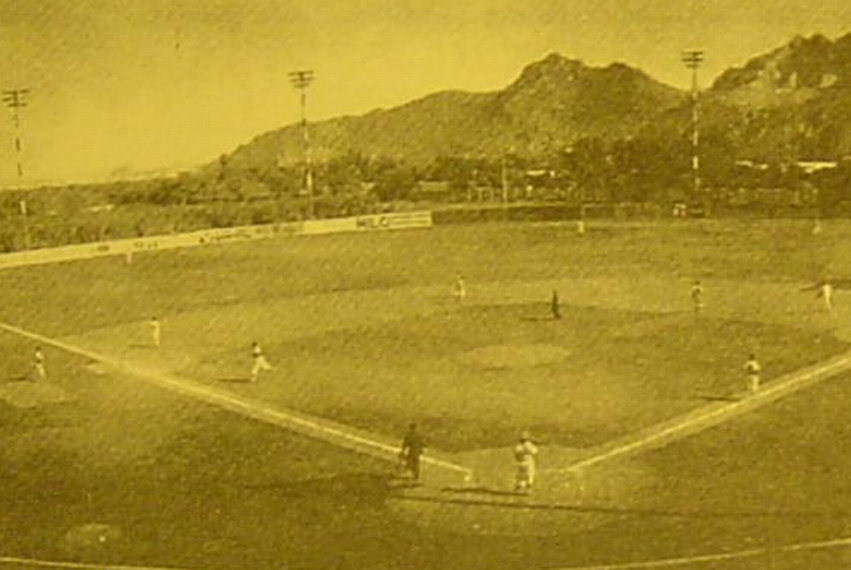
When I was just seventeen, so many sad years ago, and playing my one long summer for the Seraperos de Saltillo in the Mexican Baseball League (AA), I didn't much think about Grantland Rice, or the one great Scorekeeper coming to pen my name. 

No one thinks about things like that when they're seventeen, even if they were, like me, born under a lugubrious sign. Even though I was born preternaturally old, I was still a young man, living only for my next at bat or next breast I could feel or next beer I could swallow. I wasn't thinking about much else.

Still, with my stern an Old Testament upbringing I heard Granny's words rung like Big Ben from the highest bell tower, ever reverberating, even though they pealed from quite a distance.

For when the One Great Scorer comes
To mark against your name,
He writes - not that you won or lost -
But How you played the Game.

I suppose as cornball as all that is, there's something in believing in a world, which I don't, presided over by the One Great Scorer. I suppose as cornball as all that is, it would be nice if it mattered How you played the game. I suppose it would be nice if your You were as important as your Do.

I suppose I'm as starry-eyed and stupid today as I was 50 years ago when I ran away from the deafening noise of an empty home where the only sound was hatred, frozen vegetables, dishes crashing when they were thrown, Miltown bottles being opened and gin being swilled.

I once was lost, but then I was found, by Hector Quetzacoatl Padilla, whom I dubbed Hector Quesadilla, just moments after he transmuted my el Norte moniker into Jorge Navidad--an improvement, I believe, to George Tannenbaum, especially given the mostly beered-up fans who would rain bottles down on any ballplayer, especially an American playing in their stadiums, in their cities, in their league.

During that long summer so long ago I had the longest stretch of good fortune in my already too long life. It was late in the season and late in a game of no-consequence when a pitch came in on my hands, a screw ball, maybe, that jammed me inside but that I was able to smack short over their second baseman and I found myself safe on first.

On the next pitch of this game of no-consequence I ran on their arm. He was not holding me on and I got a Bob Beaman jump and stole second, sliding in for the dust and drama rather than for the necessity.

Perez-Abreu was up and he text-booked an outside fastball down the right field line. I rounded third, and feigned stopping to draw the throw to the cut-off, then put my head down and charged home, while Perez-Abreu, alertly, took second on the dust up at the plate.

Next, Buentello also went to the opposite field and Perez-Abreu scored from second like I did. Then, seconds later, it happened again. Angel Diablo stroked a single to right and brought in Buentello. Now, instead of being down, we were up. Scratching runs with scratch hits and speed and playing ball like it should be played: heads up and aggressive. 

There are those, of course, who will always admire the long ball. But the best baseball is baseball like this. Where little things lead to big innings. In baseball, and yes, in life, it's the little things that make the big things happen.

We won that game that doesn't matter against it doesn't matter who, by doing the little things while playing the game that do matter. Like going with the pitch, like running with your head up, like outthinking the guys living by rote and doing all that at top-speed.

There was no pep-talk that inspired all that. Just, after a season where a hundred and two bad habits had taken over our days and nights, good habits emerged for a brief happenstance and seemed to take over, like a cloudy day, all at once and unexpectedly becoming clear.

Dowson wrote about it 150 years ago. In a poem, I knew even then, as a 17-year-old,

They are not long, the days of wine and roses:
Out of a misty dream
Our path emerges for a while, then closes
Within a dream.

And that's what happen to us Los Seraperos de Saltillo late in the season, playing a stretch of games under the blister of the sun in El Estadio de Beisbol Francesco I. Madura. 

Our path emerged for a while and we won games like we had never won before. Playing smart, running fast and heads-up.

Our path emerged for a while and then closed. 

That's so many things. So many green lights that turn red just as you step on the accelerator.

Just as we as a team started doing everything right, we started again, doing everything wrong. The boneheadedness of mediocrity reinvigorated itself and had its way with us.

As a manager, three or thirteen things pissed Hector off. One was taking a called third strike--especially if there are men on. Second is missing a cut-off with a throw, or failing to back someone up on a play. And last was bunting one straight up so it would be an easy out.

Those things and a dozen more were back. And so was our griping and our grumbling and all the things bad teams do to make themselves worse.

In the forty-nine years since that summer when I had four games or five where my path emerged for a while before it closed, I'm not sure I ever had a longer skein of things going just right. That bad fortune wasn't for lack of effort or my bovine stupidity. It's just the cosmic law of entropy that rules what's left of a disordered, decaying and entropic universe.

Sea Peoples

There's a belief in history, that about 4000 years ago, the great ancient civilizations of Crete, Assyria, Knossos, Babylonia and one-hundred more were destroyed by the sudden and unexpected descent of an unknown people called the Sea People. 


Where they came from, how they came, and why they came, no one knows. But they did come, the theory goes, and they destroyed all civilization, society and progress in their way. And then, just as abruptly as they arrived, they vanished. Leaving not a shred of papyrus, a broken shard of pottery or the hull of an ancient ship.

For me, all those years ago, it might have been in Saltillo a season under the spell of the Sea People. Except for one week when, for no reason at all, they left the benighted land I had arrived in, and for that one week, the seas without the Sea People were flat and calm and the fish abundant and easy to spear.

Or as Porfirio Diaz, dictator/president of Mexico for nearly thirty years is said to have said, “Pobre México! Tan lejos de Dios y tan cerca de los Estados Unidos.” Poor Mexico. So far from God. So close to the United States.

Maybe the One Great Scorer sent the Sea People aweigh and away. Or maybe the Sea People and the Scorer are one and the same. 

Either way, that misty dream was all too short. And it all too easily slipped through my fingers.


Thursday, October 17, 2024

Shorthand.


For the first twenty years of my forty year-career we didn't worry about what decks looked like. In part, because we didn't have decks.

We had foam core boards.

We'd arrange the foam core in order and present our work that way. Some people of my vintage learned to read upside down as they stood and flipped through ads and TV spots and even the occasional radio spot all enlarged and mounted on foam core.

A funny thing happened when you presented on foam core. The clients looked at you. And not the screen. You could look up and look in their eyes and actually talk directly to them.

We never designed presentations in those days. We designed work. Designing a presentation? That's like designing the rags you use to wax your car. How the rags look ain't important. How they treat your car is.

Today, we design presentations. 

As if the presentation is the communication, not the work in the presentation. And there are myriad online tools to have dissolves, reveals and sweeps to make your presentation cooler.

To my mind that's diametrically opposed to the line I've heard attributed to the recently-deceased legend, Sal DeVito. "Make the logo smaller and the idea bigger."


Today we make the presentation prettier and the ideas scarcely matter. 

See above. 
Vomit. 
Continue reading.

Back in my Ogilvy days I was chastised for not knowing keynote or powerpoint. I was told knowing them was the key to getting ahead.

Oh. 

Presumably that would allow me to put a slide in a deck that reads "We're on a Journey," as my boss once did while I was at Ogilvy. No. Magellan was on a journey. You're a brain-worm infested dweeb.


Late last week because they're spread around the globe, I had a client presentation at 5PM on a Friday. I don't like to work that late on Fridays. A) I'm tired. B) Most everyone else is too.

But in an effort to be gracious and accommodating, and because I wanted to sell some work and get my money, my Account Director and I agreed. From 5PM to 6PM on a Friday.

Here's the first page of my presentation. 

As ugly as the bottom of my shoe.


My client didn't care. My client didn't say anything. Nor did my Account Director. Nor I.

Here's a bit of the last page of my presentation:


What's salient here is the page number: 38.

Outside of the cover sheet, we had 37 pages of ideas. Of ads. Of lines. Taglines. Strategically based. Intrusive. Assertive. Bold.
Loud. PATW. (Punching above their weight.)

Yes.

I showed 37 ads.

37 different ways to do what I do for brands.

Define who they are.
Differentiate them from everyone else.
Demonstrate to readers so they can feel it not just learn in.

Often, I don't even think in terms of ads in the Wall Street Journal. I think about a deck that lands in front of an investor at Andreessen Horowitz. Or in front of a customer who for whatever reason gave my client a minute for a meeting.

What will make those targets salivate. Literally, salivate. And say "I need me some of that." Or "that's a great idea." Not, "that's a great ad." But "that's a great product."

I think advertising today is like established religion. Interested in dogma and minutia and monetary enrichment. Not improving lives and fulfillment. 

We're interested in aesthetics for aesthetics' sake. Not for functionality's sake.

Our industry has become deeply masturbatory. We're self-gratifying seed spillers. (SGSS. Not a bad name for an agency, right?)

Occasionally, I bring a little theory to a deck. But it's never more complicated than this. 


And then I jump into the work that does all that.

I couldn't give a rat's ass that I'm not A) on a journey. B) going to Cannes. or C) cool.

The only journeys I'm interested in are the ones my clients, and eventually me, take to the bank.


Wednesday, October 16, 2024

Escalation of Dumb.


A lot of our modern world, from discourse online, to advertising, to politics can be explained by a scene from the 1950s Broadway musical then movie, "West Side Story."

In the prelude to the rumble between the Jets and the Sharks, the weapons of choice keep escalating. 

Fists. Bricks. Hoses. Belts. Bottles. Chains. Knives. Guns.

The same madness is happening in politics and in advertising.

In just eight years we've gone from a Brick like Sarah Palin to an Automatic Weapon like Donald Trump. The darkness, ignorance and hate get more and more powerful. 

Because the only way to get attention in the outlandish dopamine-driven world we live in is to do something absolutely mad.

Trump, IMO, isn't competing with Harris for attention.

He's competing with the Dark Web. 

Whatever crazy-ass rumor starts there, he has to build on. Lest someone else get more attention than he does. 

This is truly truly frightening.

And dangerous.

And there's no turning back.

Meanwhile the same descent is happening over on what used to be called "Madison Avenue." It was called Madison Avenue before the entire, hugely profitable industry was bought up, eviscerated and relegated to the fringes (the ad industry is no longer located near its clients, because the ad industry is no longer important to its clients).

Now, we do handbags that hold mayonnaise jars. And every agency that pays an electric bill blathers on about the myriad awards they've won when viewers like you and I can literally go months (if not years) without seeing a spot or an ad we actually notice and like.

Seriously, when was the last time you said, "I wish I did that?" About an ad that actually ran. Not a stunted stunt that twelve people outside of the agency bubble will ever see.

The post above, er, the inscrutable post above is a good example of sludge swirling down a clogged drain. 

A couple days ago I saw on Linked In the promotion I pasted above. I've shared it with friends. Friends 30 years younger than I and friends who used to lead large New York agencies.

This isn't more Ogilvy bashing on my part.

I literally can make no sense of the (long) sentence above. Part of that might because they decided not to punctuate it. But a larger part is that it's just plain-old baffling. And now, someone will have to say something more absurd to knock that absurdity off its pinnacle.

[As always, if anyone at Ogilvy would like to explain this, this space, and my 85K weekly readers are all yours. I won't even edit.]

Bringing this back to my West Side Story example above, this is an escalation not of street weapons but of a dangerous grasping at what's momentary, while ignoring (because you're social first) the millions of people who aren't social first and who don't understand what you're saying or who want something very different from the marketing they get.

We live in a world where it seems the majority can no longer discern the difference between truth and falsehood. You see examples of that every day. And not just if you read Orwell.

You see it in advertising, too.

No one anymore knows what's good. What works. Or how to reach people.

I'll wait for the definitive white paper on the topic.


Tuesday, October 15, 2024

Vout-o-Roonee.


This fell into my feed late last week and made me laugh.

Then cry.

Because if you think about it, it's exactly what's gone wrong with modern amerika mass-production assembly-line advertising. 

We no longer strive to make creative good so people notice it. We make it ubiquitous so people run away from it at top speed and it keeps chasing.

It's Stalkertising. Not Advertising. 

Everything sucks. But damn, we're efficient.


On September 22, a client sent me a document on a platform I'd never heard of called "Loom." I might have had to register to get the document but I certainly didn't want or need another messaging platform. Since September 22, I've gotten a dozen emails from Loom. Reminding me to upgrade. Beckoning me to take a tour of my workspace. Warning me that I'd be downgraded if I didn't upgrade and upgraded if I didn't downgrade.

Not one email was remotely interesting, informative or otherwise noticeable. They were merely stalkers. Chasing me. Following me.

Not givers. Takers. Urging me to engage the way a drug pusher might.

Wednesday night, I had a facetime call with my elder daughter, S, and my two-year-old grandson, J. Facetime is a marvelous thing. It doesn't equal in-person contact, but it beats dipping my quill pen in an ink pot and writing a letter.

J, like many two-year-old boys, is heavily into cars. He can identify many different sorts of vehicles and every construction vehicle this side of a major government infrastructure boondoggle project. 

While we were speaking, J showed me various diggers and pushers and lifters and was thrilled by them all.

While J and I were talking, I remembered an old r&b song called "Cement Mixer" by the great and today unknown, Slim Gaillard. I quickly found six-minutes of Slim performing the number from a 1962 appearance on the old Steve Allen Show.

For whatever reason the YouTube downloader I usually use to remove a clip from YouTube to my hard-drive won't let me download this clip of Slim. But you really owe it to yourself to take the time to watch it. Maybe more than once.

In fact, if god forbid, I still worked with the creaking edifice of some decrepit holding company agency (count the redundancies in that single sentence) I think I'd make the video required watching.

Because Slim Gaillard is creative.

Creative.

He does what everyone else does. But makes it unique. Ownable. His.

You've seen a thousand people play keyboard before. You've never seen anyone play like Gaillard. 

Never.

Gaillard is the pithy core of what creativity and creatives are supposed to be.

Original. Funny. Unexpected. Spontaneous. Irreverent. Joyous.

Every agency in the world every three months wins a "Best Place to Work" Award as paid for and pronounced by some website you've never heard of and never read. Not a single one of them has any elements of any of the adjectives I used above.

Think about Gaillard when you check your email today and when you see 47 different subject lines from 47 different companies that read, "Spooktacular Savings," or "Our $49.99 Triple Play is all Treats, No Tricks!!!"

All the originality of asphalt in a pothole.

BTW, the world in real life wasn't big enough for Slim Gaillard. He couldn't in fact be constrained by the limits of the English Language. So he invented his own language. And as much as I love the magic of the English language, Gaillard improved it.

If you look hard enough online, you can find his Vout-o-Reenee Dictionary. You can find your own copy. You'll never use English the same way again.