Monday, November 14, 2022

Mendacity and Tapioca.

A radical thought, at least as we near the quarter-of-the-way mark in the 21st century.

Proof, not hype.

Deeds, not words.

Facts, not adjectives.

Details, not dreams.

All around us, today and every day, in politics, in business, in advertising and especially in religion, we see giant bubbles of bombast being inflated inflated and inflated.

We hear the vacuous proclamations of charlatans shouting at the top of their voices, that such-and-such a manipulation of code, or dogma, or data, or dollars will turn some little piece of dusty dirt into a City of Gold. 

Of course, that behavior is certainly endemic in what used to be the advertising business. For decades now, various chieftains have proclaimed that they had the ethereum-way to get something for nothing. Whether that something is a click-now button that glows, retargeting, interactive, data-insights, storytelling, mobile-first, or any other prosciutto-thin-sliced widget of bullshit that hungry something-for-nothing-ites care to consume with their morning $7 cup of coffee.

The truth is selling is hard work and sweat and trial and error and dos and redos until you get something that works. Despite the siren song of magic and the blind-appeal of the eternal (and infernal) idea that life is an if-then-proposition, no one has the answer and no one ever will.

Work is work. 

Ideas are human sweat, not binary code. Or ponzi'd billionaires who are deified when they should be defied and de-iced and de-frocked and de-sexed and defiled and denuded.

Too many to mention. But. Pick a billionaire, virtually, any billionaire. 

Figuring out the one thing that works, communication based on simple, timeless, human truths takes time. It's that simple, it takes time.

I've worked for many science-believing ad agencies, run by consultants and other phonies whose suits are almost always two sizes too small. They speak with MBA-cocksuredness that they have the Rosetta stone of modern marketing. Just as I suppose Bernie Madoff spoke with similar assurance that he had unraveled the code of modern investing.

I always had something simple to say about that. 


"If you walk along Madison Avenue, maybe the wealthiest shopping street in the world, roughly one-store-in-six is empty. That's sixteen-percent. I'd imagine that proportion is the same in pretty much every mercantile boulevard in the world. 
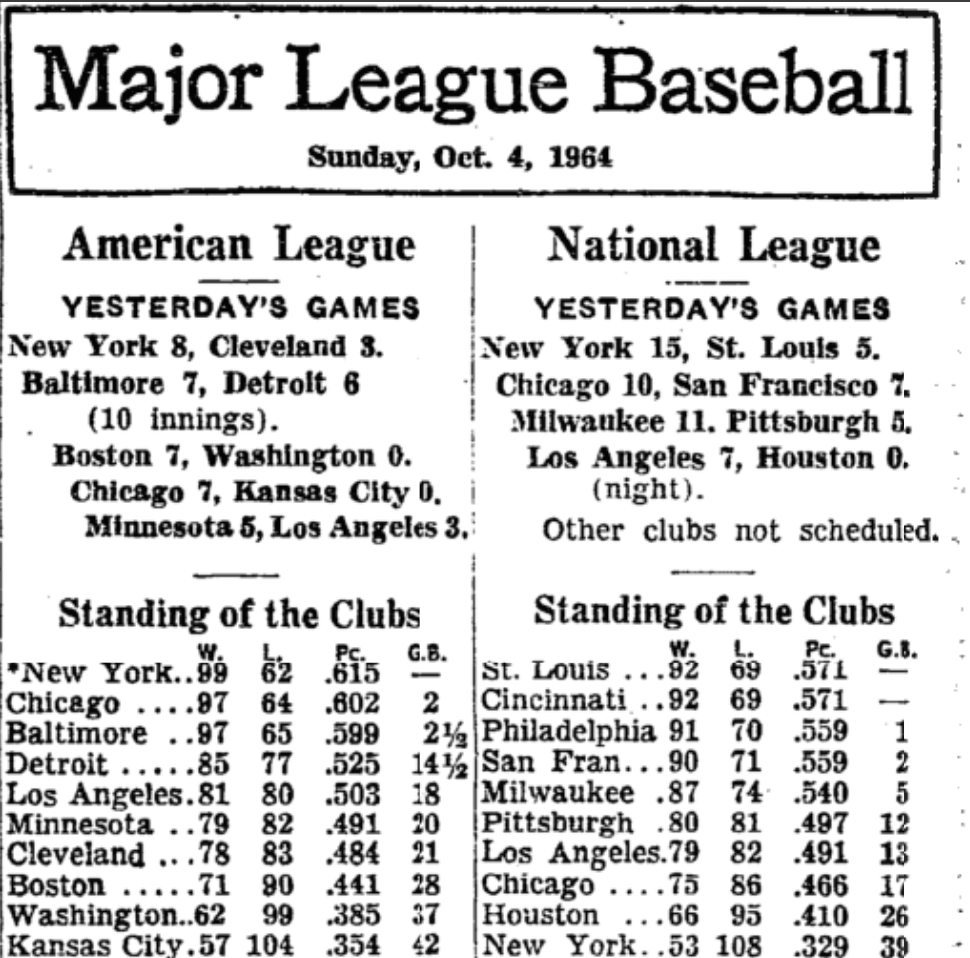

"If you've figured it all out, why are there so many failures. Likewise, in baseball, if Moneyball is so infallible and intelligent, why do some teams lose 104 games out of 162?"

That's my belief showing.

That the only thing that works in anything, especially the only thing that works as you go through your life trying to be a decent human-being, a mensch, is working hard. 

It's sacrificing of yourself. It's helping others. It's working when you'd rather have a Pepsi and a blonde. And it's trying again.

No one from Midas to Rumpelstiltskin to the apostles of modern wealth through exhibitionist prayer have found a way to obviate the sweat of your brow and the ability to get up when you're knocked down.

There is such a thing in the world as intrinsic value. Of real worth. But as long as we gin up the false and febrile, intrinsic value, which involves sinew and labor, will always show up second best. Which means it's too hard, way too hard for the spurious providers of quarter-to-quarter shareholder value built of a firm foundation of runny tapioca. 

Listen to Big Daddy. Listen to him. And skirt mendacity.


Friday, November 11, 2022

Manos de Piedra.

When I was still just 17 and playing under the unforgiving sun in the Mexican Baseball League, for one of the first times in my life I learned what it felt like to feel loved.

My manager, Hector Quetzacoatl Padilla, which my yanqui tongue pronounced Hector Quesadilla saw something in me that I, of course, I hadn't even seen myself.

A few years earlier, Mrs. Chapin, my tenth-grade English teacher acted on a similar impulse. While most of my classmates were assigned one book to read every two weeks or so, Mrs. Chapin would send me home with six books, or eight.

The class was assigned "The Emperor Jones," by Eugene O'Neill. Mrs. Chapin also weighted me down with "Mourning Becomes Elektra," "A Long Day's Journey into Night," and a passel of other plays I could scarcely fathom. 

Years later when I started working as a copywriter at a major New York agency, I went through that sort of boot camp again. When I gave my boss, Harold, some copy to review he would schedule an hour or two--as long as it took--and go through every word of my copy with me. He wanted to know my reasons for every word choice I had made. Harold wanted to know I was thinking everything through.

One day back in Saltillo, Hector and Guillermo Sisto, the oldest player on the team and Hector's best-friend and extra-player-coach took me aside. 


"You have heard of Luis Montes de Oca?" Sisto asked me. "Two coaches would help him with his fielding. One would fungo from the right side. One from the left."

"We do this for you. You have manos de piedra. Hands of stone. We will soften them."

"I have not heard of Luis Montes de Oca," I conceded.

"Un mago. A magician. Houdini."

Sisto and Hector stationed themselves by the pitcher's mound, each with a bucket of balls. Sisto batting left, Hector right. And one after another like an old Soviet Katyusha rocket launcher they shot balls at me. 

One then another then another. Crack, thud. Crack, thud. Crack, thud.

What seemed like 50 grounders a minute came my way. 25 from Sisto. 25 from Hector. 

I'd smack each ball with my glove, slap it to the ground, then shift to smack another.

Some hit my shoulders, or bounced off my chest. Some I dove for, some, I missed. But they kept coming like a hail storm.

When the buckets of balls were emptied, the three of us gathered up the balls and we went at it again. I had been to a thousand baseball practices in my life and fielded what seemed like a million grounders smacked my way. I had endured a stretch of 14 games in twelve days. 12-hour bus rides up over the Sierras through the night. And game after game in hundred-degree heat.

But I never felt as beaten as I felt after those hours of double-barreled duress. It was like being in the middle of a beehive and trying to swat yourself safe. Except the bees were like Medusa and if you swatted a dozen, a dozen-dozen more would arrive.

"We go again," Hector said after another hundred or two-hundred grounders. "We go again."

"No," said Sisto. "We have done enough. We have hit our bodies tired. We have done enough.

I walked alone off the field to the showers. My body had aches where I never knew before I even had body. Bending over to untie my spikes was like climbing a steep hill.

"It is good," Hector told me.

"It made de Oca, de Oca," Sisto said.

I cried to myself as I showered and dressed. I inspected the red, blue and purple welts all over my body. We had a game that night. I was as sore as a bad welterweight and I could barely lift my hands above my waist.

The hands of stone weigh heavy.


Thursday, November 10, 2022

We Survive Harder.


This totally isn't fair but what's a blog for if not to be unfair sometimes. Or at least opinionated.

I started noticing a decade or so ago that a change of currency was happening. I don't mean we were switching from dollars to drachma. Or even to ethereum. 

I mean when people judged something like a movie, the first basis of that judgment seemed to be box-office take. I understand that criterion if you're a bean-counter in the movie business, but I don't understand it from the point of view of the potential audience. I'd wager there are still some people who walk among us who, with snobbery or not, would stay away from anything that's too too popular.

My point in this, I hope, is larger.

It seems so many people have lost their ability to judge on the basis of quality. How it moves them. Makes them think, or laugh, or cry. Those attributes might still be there, but the thing that seems to generate the most buzz in the media is how much money something cost or how much it's making.

In our little corner of the world, I wonder if something similar is happening. 

Maybe it's a generational thing. I never show work that I don't think is pretty good. I say to myself, my friends are going to see this. People like Dave Trott, Dave Dye, Mark Denton are going to see this. My ex-bosses are going to see this. I don't want anyone to think I'm a hack.

We all do work that we wouldn't put in our portfolios. Why show it to the world?

Today, however, I see dozens of agencies and creative people showing work that is decidedly mediocre. Sometimes they soft-pedal it. "We created and shot the spot in two days in the middle of a hurricane." Or, "It was shot by Quentin Tarentino's cocker spaniel." Or "It won a silver lion at Cannes for best commercial shot on a set with radishes at the craft table."

I think what's happened, at least in the agency business is a  lowering of ambition fueled by the harshness of today's industry.

If we used to only show work we're proud of, today it's so difficult to get anything actually produced and on the air, that we'd be proud of a fart if it were filmed and it aired on one of the networks.

It seems no longer to be about doing the job well. 

The job seems to be about surviving the job.

This is no indictment against anyone or any agency. And I very well could be seeing the glass half cynical.

But getting work produced now is like running a marathon. If one-million people a year run one, times matter, really for only about 100. So 999,900 just want to get through it. When they do, they wear medals around the city and boast of their accomplishment.

It seems to me survival, not quality is the standard of our industry today.

On the other hand, this post probably sucked.


Wednesday, November 9, 2022

Metaphors Amok.

In old-timey baseball parlance, I just had a meeting where I swung and missed. 


Three times.

Wide.

I didn't come close to smiting the ball.

Again in old-timey baseball practice, I swung like a rusty gate.

And I looked awful doing it.

It's easy to rebuke yourself for looking like an imbecile. Many of us grew up and learned through the years how to ride ourselves rough when we did shitty. There are thousands of psychiatrists right now around the world working to undo some of the mean emotional damage we do to ourselves.

In the world I live in now, swinging and missing have been rarer than it's ever been. Since I speak directly to CMOs and CEOs now, I rarely get an assignment that I don't understand. I usually hear straight, unfiltered and from the source what they're thinking and what they feel they need. All the layers modern agencies and modern marketing organizations have created make advertising worse, not better.

Of course, I'm not a waiter. I don't give the client exactly what they ask for. I hear, listen, think, interpret. But I do get to hear their pain directly and can come at things like a HIMARS missile system.

Still, I'll admit, while we all know Garbage In, Garbage Out (GIGO) sometimes we live with another sort of GIGO: Gold In, Garbage, Out. 

That's life.

As a human.

Doesn't matter who you are. Even if you ingest nothing but rose-petals. Shit is shit and shit stinks.

As did the work I presented at 7AM to a client in the UK.

Well, as a wise-person once said, "Well, fuck a duck."

Ducks being what they are there isn't much you can do. Except going back to the page and going again. 

No shame in that.

Humanity in that.

And most human of all?

Trying to do better next time.

Like at 2PM.


Tuesday, November 8, 2022

Hopper to It.

I don't care how much various radical right politicians are trying to scare us. Every night there seem to be 12 stories or 20 about more and more wheels coming off our societal bus. 

We hear about murders. Marauding hoodlums on mass transit. Shootings, muggings, stabbings, cop-killings and more. If you believe all that, you'll lock yourself at home, GrubHub all your meals, Netflix yourself into oblivion. And vote for the asswipe that promises the harshest response to what they tell us is the second-coming of the invading hordes.

My wife and I have been in New York the past week. For business, for friendships, for doctors and to see a cousin run his first New York City marathon. Amid all the hyperbole about the city and the world falling apart, I've scarcely ever seen New York--and I've lived here my whole life--more vibrant, funny, and alive.

I keep shaking my head and saying, that idiot called it a ghost town. That idiot said it was dead. And half the doltish world seems to be calling it not post-apocalyptic but in medias res, apocalypse style.

Naw. In any agglomeration of ten-million people, shit is going to happen. But I'm not seeing it. And I'm not sitting at home in a rocking chair knitting an antimacassar. I'm living. Maybe in one of the world's great cities--a city not yet in the dark ages, despite what they might say to scare us.

On Saturday, my wife and I hustled downtown to the Whitney, where there's a massive Edward Hopper show and massive numbers of people trying to get it. 

Fortunately, I found a scalper right outside on Gansevoort Street.

"Who needs two for 'Sunlight in a Cafeteria?' I got two. Who needs two?"

The scalper's original asking price was $77,000, but I got him down to $50,000 and my wife and I walked in.

One of the things I love about giant exhibitions like the Hopper show is you get to see the development of an artist over time. While there were hundreds of paintings, watercolors, sketches and etchings, I spent most of my time looking at these five works.

Mainly because when you look at the same scene in various stages of finish, when you look--essentially--at rough drafts of things, you get to see how minds work. That always served me well when I was a creative director. And it's partly because I like seeing the cross-outs.

Here's one of the bridle-path in Central Park, a sketch and a finish. It's a bit like those kids' puzzles in "Highlights" magazine. "Spot the differences in these two pictures."

See what was added. What was taken away. It's a good game. It gives a peek inside thought-processes.


I especially enjoyed this sequence below, though the finished "Nighthawks" was not exhibited. It's as if you can see a director blocking out a scene. Or a good writer creating an outline.

There's a lot that's mad in the world. If you study history as I do, you'd know that's almost always the case. Just about every civilization from Pax Romana to the Persian Empire to the glory of the Emerald Isle extols a time when a "maiden bearing a nugget of gold on her head could wander safely throughout the realm."

As the father of two maidens, it's nice to think that such a circumstance ever really prevailed. But the world always has been, and always will be a fairly perilous place. There's not much anyone, certainly not any politician can do about that.

The best you can do, the best we can do as humans is to not succumb to fear. But instead, live our lives as human beings. Loving, laughing, learning and buying from scalpers.


Monday, November 7, 2022

Ted and.


As those who know me or read me know, back in September I flew to Lisbon, Portugal to deliver a TEDx talk. It's finally been uploaded to YouTube and I'm posting it here.

I hope you don't hate it.

There's a notion that doing something like this is an individual sport. Nothing could be further from reality.

Laura Tannenbaum, my wife, came to Lisbon with me, made me rehearse, critiqued me, and drove me forward. As she always does--despite my moods and grumblings.

Hilary Love, my business manager, account director and friend, gave me great feedback on the earlier drafts of my talk and helped me shape it and make it better. She pulls no punches.

Sid Tomkins, my long-time art partner designed my slides and just generally put up with my back-and-forth and indecision. I've worked with Sid for decades. He makes everything he touches better.

Rob Schwartz, was my spiritual beacon and inspiration--he helps me shoot for what passes for stars in my universe. He also, importantly, was my wardrobe advisor--assuring that my inner Oscar Madison stayed very inner.

Debra Fried, gave encouragement and also wardrobe advice--telling me not to wear the baseball cap as too too. Her wisdom and laughter were with me on stage.

Teresa Alpert, a long-time confidant and advisor read and advised and encouraged. As she always has.

As did my brilliant daughters, Sarah and Hannah, who in never letting me get away with anything but what they expect from me, helped me move angstroms closer to being a decent person. Their incandescent love is light.

And of course, Marta Gonzaga, who plucked me off of LinkedIn and invited me to Lisbon and took care of me so well. Who I now count as a friend.

Humans.

All.


Friday, November 4, 2022

It Happened One Night.


No matter how early I wake up, even when I'm crazy with work and wake up in the fours or, even, the threes, ninety-nine days out of one-hundred, my wife, Laura is up well before me. If I have the energy of a well-charged flashlight, Laura is the Hoover Dam, the Tennessee Valley Authority and about sixteen nuclear plants in comparison.

On the morning I am writing about, past was prologue. Laura was already in the kitchen when I stumbled down the stairs in our rickety seaside cottage to grab my first cuppa jamoke. 

I pet Whiskey's soft head and blearied my way to my Joe. I drink room-temperature coffee, something I picked up from Gregory Peck in the great William Wyler movie "Roman Holiday." On Peck's suggestion, I tried coffee that way, and I haven't really ever gone back to hot.

"Good morning, sweetums," I said. And I went to kiss and hug Laura, as is my usual uxorious habit.

Laura looked at me aghast. 

More aghast than usual.

"You're breaking up," she screamed. "You're all pixelated. Look, you're not finished loading."

"What are you talking about?" I scowled.

She dragged me toward the mirror in our downstairs bathroom and I saw what she said was true. I no longer appeared fully human, but instead like an image on my computer that hadn't fully-formed.

"We have to get you to a doctor," she said, worried. And she began making calls to some people she knows down at Yale New Haven Hospital.

Minutes later she barked. "Get in the car. I'm driving. We're seeing Weinstock."

Dr. Weinstock, the eminent Dr. Weinstock, is a specialist in Fiduciary-ectomies at Yale. He's considered one of the best in the business. And could get us seen by the right specialist.

In just about an hour, we found parking and were in Dr. Weinstock's elegantly appointed and oak-paneled office. We sat each in a deep burgundy arm-chair and moments later, Weinstock arrived. As he walked in, he looked over his half-glasses at me.

"You're pixelated," he screamed. "You haven't finished loading. YOU DON'T NEED A DOCTOR! YOU NEED A CONSULTANT."

"A consultant," I asked. "What do you mean, doctor?" At that moment I saw the specter of death facing me. I immediately thought of the immortal lines of John Donne, and softy mumbled them, "send not to know/For whom the bell tolls,/It tolls for thee."

"You need a consultant," Weinstock stammered. "That's the
worst digital transformation I've ever seen. Hold on."

Weinstock pushed a few numbers on his cell, "Bruce, it's Norm. 
This fellow just came in. A Mr. Tannenbaum. He's got it. That's
right. His digital transformation has gone bad."

About two hours later, my wife and I arrived in Grand Central
and headed to the lush offices of a firm I'll call McCantsey 
Consultants. 

"I'm here to see Sam Blisken," I said to the receptionist.

"Oh, you're the bad digital transformation," she smiled without 
looking up from her computer monitor. 


Just moments later Blisken's assistant was out taking us back to 
Blisken's office which was roughly the size of the old Roxy 
Theatre in Manhattan which they say had 5,400 seats.

Blisken was also a talker-without-looking-upper. Focusing on his
well-manicured nails he said, "Bad digital transformation, I can
take care of that. We see that all the time. You could say here 
at McCantsey, we practically specialize in it." 

He scribbled some notes on a sheet of high-rag-content paper.

"Two years. Two partners. Six consultants. Two-million dollars.That'll cure you," he said. "Like in no-time."

I looked at his prescription.

"This will make me human, again?" I stuttered.

"I said I'd finish your digital transformation and we'd do it right,"
Bliskin said. "Nothing about making you human. In fact, I have
to do a six or eight-week review, but we might skip over human altogether, very passe these days, and take you straight to Web three-point oh."

At that moment four young associates of Bliskin burst into the room. Three were texting on their phones, six were scrolling on
their iPad.

"Ixnay on the Web three point oh, boss," said one.

"Let's get him straight to VR," said another.

"AR," said another.

Then as one, like a well-trained church choir, they sang out,
"The Metaverse."

"I just want my husband back," Laura sobbed.

"Don't be stupid," said Blisken. "Your husband will be better
than new. He'll be enhanced reality."

Laura cried some more.

Who could blame her?

Who would want my reality--enhanced or unenhanced?


Thursday, November 3, 2022

Not Well-Bread.


There's a famous writer in the Yiddish canon (the canon without ammunition) called I.L. Peretz. He was born in 1852 and died in 1915, living in what today is Poland and what was then known as the Pale of Settlement. Basically crappy land where the Czar decided to throw all the Jews so they were a) out of the way and b) close enough to be taxed and inducted into the army and c) handy when a pogrom would cool the tempers of the non-Jewish peasantry.

Though in the parlance of the anti-Semitic Stalinist regime, Jews were "rootless cosmopolitans," and in the language of the Christian right Jews are either "not real Americans," "loyal to Israel not the US," or the demons who are "economy-and-media-controlling spawn of the devil," Jews have done well in the world of literature.

I talked to my (gentile) friend Stacy about a book I was writing once. Stacy rose high high high in the publishing world but had aged out at about 55. I told her about my book and she said, "it's probably publishable. Jews read."

Charles Murray--the disgraced sociologist--wrote a piece in "Commentary Magazine" back in 2007 called "Jewish Genius." Once the European social revolutions of the mid-nineteenth century had finally granted Jews full citizenry rights and admission to universities and elite professions, something profound happened in Europe.

Murray writes, "Disproportionate Jewish accomplishment in the arts and sciences continues to this day. My inventories end with 1950, but many other measures are available, of which the best known is the Nobel Prize. 

"In the first half of the 20th century, despite pervasive and continuing social discrimination against Jews throughout the Western world, despite the retraction of legal rights, and despite the Holocaust, Jews won 14 percent of Nobel Prizes in literature, chemistry, physics, and medicine/physiology. In the second half of the 20th century, when Nobel Prizes began to be awarded to people from all over the world, that figure rose to 29 percent. So far, in the 21st century, it has been 32 percent. Jews constitute about two-tenths of one percent of the world’s population. You do the math."

Perhaps it is for the reasons Murray cites above that Jews are no longer considered, at least in advertising, to be diverse. For convenience's sake, we are lumped together with white people. However, the real world knows what five-and-dime demographers and agency DEI people don't know.

As Bret Stephen's pointed out in last week's "New York Times," "For 2020, the F.B.I. reports that Jews, who constitute about 2.4 percent of the total adult population in the United States, were on the receiving end of 54.9 percent of all religiously motivated hate crimes."

It's with all this context that I want to talk about a story by I.L. Peretz called "Bontshe Schweig," or "Bontshe the Silent." You can get a pdf of the story here. It will take you about six minutes to read it, depending on how often you interrupt your reading by checking your social accounts.

In any event, "Bontshe," was a story I first read in college when I was still in my teens. I read it again 40 years later, just when I was turning 60.

To my eyes what makes the story great is that reading it as a young person and then as an old person, if you're anything like me, you'll find two different meanings in the ambiguous ending--I found Bontshe pathetic, weak and despicable in his meekness when I was young. Today, I understand.

The crux of the story is this.

Bontshe has the most miserable of all lives. He's never had anything go his way, never had a stroke of luck. Never felt loved or respected or heard or not hungry. Despite all that, Bontshe never complains. 

The angels see this and when Bontshe dies they whisk him up to heaven and herald him as a great man. But as are the rules of heaven--they put Bontshe on trial. When he is deemed the most-righteous of humans, they grant him anything he wants. Any luxury, any comfort, any laughter. Anything.

Bontshe, simply, asks for a warm roll with sweet butter melted on it.

That's it.

Today, as an old man, I understand Bontshe.

The riches of the world, the fast cars and slow women, the big apartments, the five-star resorts, the fancy restaurants, expensive clothing and vintage wines don't mean anything to me. 

As the world seems to be falling apart, as a new wave of hatred and violence seems to be tsunaming over our planet, as catastrophic Anthropocene environmental change has arrived, all I want is a bit of peace every day.

Maybe some quiet. Maybe some sunshine. Maybe some dark coffee. And a nice piece of toasted raisin bread with cinnamon with just a dab of salt butter, the salt and the sweet of the raisins making me smile. Oh, and just a scintilla of quietude, kindness and love thy neighbor.

To be clear, I don't know what this post is about except maybe feeling aggrieved. And scared. Yes, scared.

Last week with the horrors of Ye and the 405 and asses like Kyrie Irving taking up every bit of the news, not one agency DEI person said anything that I could hear.

Like most silence, it was deafening.


Wednesday, November 2, 2022

Not Playing at Monopoly.


I was asked not long ago to attend a conference on aging and because I'm stupid, I readily said yes. 

To be frank (I'm frank and earnest with women. In Cleveland, I'm Frank, in Chicago, I'm Ernest) I'm not sure I've ever gained anything of value through my attendance at any conference. 

I know there's value to be had through networking, but I'm not much good at glad-handing and would prefer to do it through the impersonal safety of a so-called social media platform. As for provocative thoughts, information or ideas, I'd much rather read. 

Despite the deflowering of the American mind, there is a flowering of books being published and you can buy immediately and extortionately with a click, their prices being set about 80-percent too high through the monopoly power of Amazon. But all that is absolutely beside the point.

Back to my conference on aging. A young person, an employee of the host began talking. When he finished I said, "you don't know what the effect of your language has had on me. I know all the words you used, but I don't use those words the way you do.

"I don't call people curators. I don't call people content-creators. Just as I don't believe in "talent acquisition," or about one-thousand other terms that are horribly au courant."

Young and old today are from two vastly different worlds and I don't like that my world is no more.

I'm up on the Gingham Coast and my wife and I wanted to buy the weekend Wall Street Journal. If you ignore its fascist politics and pro-earth-ruination stances, it's one of the world's great newspapers. What's more, their printed edition has stories their digital editions don't.

My wife ran into two different drugstores. One from each of the major drugstore chains that control about 75-percent of the American drugstore market.

"Do you have the Wall Street Journal," she asked at Walgreen's.

"What's that?"

This leads me, at long last to today's topic.

We can call it either, "What does it mean to sell?" Or "What is service?"

I believe the way these questions are being answered today has had a huge negative effect on the advertising industry, and is the reason so many people like myself have left the industry, or been drummed out of it, and why the industry itself, in so many cases, seems to have outlived its viability. Like politics and just about everything else.

Here's what I mean.

As a shopper, no matter what I'm buying, I just about always need some kind of help. I have a question I want answered. I can't find something. I need something that's unusual and I want some help buying it, or rationalizing it. Or, since I'm spending a lot of money, I want some validation that the place I'm buying it from aren't a bunch of asses and that they value the business I'm bringing them.

I'd wager that the agency business used to do all of the above when they made a sale or serviced a client, or even, had an ongoing relationship with a client.

Now, whether you're trying to find the Wall Street Journal, some pine-nuts for this pasta dish your wife makes, a new set of tires, a garage-door opener, a replacement screen for your iPhone or a set of three or five commercials, you get nothing in return.

All shopping and all service are self-service. Woeful and confusing. 

  • An economy can't only serve the sellers and not at all serve the buyers and expect to survive. 
  • An economy can't serve only the c-suite and not the workers and expect to survive. 
  • An economy can't serve only this quarter and not think about the long-term and expect to survive.
  • Same with holding companies.

Of course, this applies to baseball teams, politics, drugstores and ad agencies.

Some powers have decided that the promise of a marginally lower price trumps all other considerations, including comfort, good lighting, respectful service, information and, heaven forfend, a smile.

Five minutes here will help. Pay especial attention around 4:04.

My personal theory is maybe more than a little red. Most everything you buy you buy from some outlet in an industry that is under monopoly control. From drugs, to tires, to phones, to candy, to gasoline, to airline tickets, to social platforms, to cable providers, to advertising.

Monopolies do the same the world over, for all time, regardless of industry.

Since you can't go anywhere else (everything's the same, anyway) they lower their costs to the absolute minimum lowering their level of service to the same standard. That leaves the greatest differential between the cost of selling something and the price they can charge. That's how you gain maximum profit quarter by quarter to the point of eventual absolute collapse, because when the only thing you offer is an undifferentiated product and your sole advantage, low cost, has been cut as low as possible, someone else will come along and either do it cheaper or better.

From this old man's point of view it seems that every industry in the world has turned into an extractive industry. Think oil company or coal mine. Or for that matter, holding company.

How much can we take out and profit from? The consequences of our extraction, be damned. 

Again it seems to this old man that the world has been strip-mined. You can't get service. There is no kindness. You never feel good about what you buy. You just want to get out without being skinned-alive.

Again: What is service? What does it mean to sell?

What is being a human?

I believe it's about more than taking from people. 

It's about giving something back.

That's what I try to do with my agency. That's why I've gained the confidence to charge high-rates for my services. I give value and of myself for the money I'm paid.

Clients keep, touch wood, calling. And coming back.

Again touch wood.

I don't sell hours.

I sell a good product:

Thinking. 

Accompanied by caring. Accompanied by running through hell in a gasoline suit to make sure I've done right by you.


Tuesday, November 1, 2022

How to Say I'm Sorry.

My last assignment at Ogilvy was by far the toughest of the aggregate of my twelve years there.

Not only was I partnering with the New York CEO and the WW CEO Emeritus (the pressure was on) but the client was, when all is said and done, a defense contractor, with a huge consumer business as the world's largest producer of civilian aircraft.

If you grew up as I did during the darkest and bloodiest days of Vietnam, you'd have learned that the military-industrial complex is essentially unable or unwilling to tell the truth. They certainly don't know how to say, "I'm sorry."

In this case, the client I was working for built an unsafe plane. Two planes crashed, killing over 300 people. The client blamed the pilots of the two-crashed planes, instead of taking responsibility themselves.

As a creative person, I had to deal with all this.

So I had to think through the universal truths of apologies. How to apologize. How to make it "stick." What should make up an effective and truthful apology?

So, I became a student of apologies.

Not Socrates' 'Apologia.' 

More visceral than that. 

As in, my wife was out of town, I threw a ball to the dog and I broke an heirloom vase that was her deceased grandmother's.

In other words, I did something that couldn't be undone. I destroyed a loved one. Because of my dumbness.

In the wake of the horror that is whatever-his-name-is and the days of non-response from his sponsor, adidas, I thought it made sense to share what I learned from my studies.

I'm not sure this is the answer to every mistake done by a person or a brand, but I'm sure it's better than doing nothing. I'm sure it's better than forming a strategy. And I'm sure it's better than hoping the whole thing will just subside.

HOW TO APOLOGIZE.

1. Don't wait. 
The minute you make a mistake, you tell the world what you did. "I broke the vase." "We built a defective plane." "I leveraged 6000 years of anti-semitism to promote myself."

2. Act to make good.
Fix as best you can what you've fouled up. In the case of the vase, "I found something that looks like it on ebay. It should be here Friday." "We are immediately grounding all such planes. We have hired a restitution expert to compensate the affected families. We are instituting new rules so this never happens again." "I am making an active effort to learn about history, Jewish history, the holocaust, African-American history, calumnies of the past and their consequences. And the historic relationship between Jews and African-Americans. And so on." 

3. Show that you mean it. 
Don't just say, do. Never play ball in the house again. Publish a day-by-day account of what you're doing to fix the processes and behaviors that led to the defective planes. Fire, without 'golden parachutes' those who chose expediency and profit over human-life. Publicly share what you learned, discuss with others. All in plain English. Not jargon and lawyer-speak.

-

I know there are professionals who make a good living as "crisis-recovery managers" and spin-doctors.

That's fine. It's certainly not a job I'd want. I'm fully booked apologizing to loved ones.

And I'm sure they have 97-page guides to recovering from gaffes, disasters and plain-old hate-speech.

All arrogance aside, I wonder how much better their guides are than mine.