Monday, February 20, 2023

Presidents' Day Polemic.

As someone who since 1980 has made a living at the typewriter and further was born into the advertising industry, I think I might have attained, through all those years, a bit of perspective. Whatever perspective I've gained is further enhanced by my current distance from the industry.

Since I was booted out by Mark Read's sized-four children's feet for harkening back to the 80s--a dog whistle for ageism and for being too expensive--I've stayed in the industry, but have migrated from it. 

I don't know if this makes sense from the point-of-view of astrophysics. I've escaped the orbital path I was on, circling the fat-assed profiteers of the holding company Ponzitocracy, but I am still obeisant to the gravitational pull of the industry. I float out there above the industry, but my spacewalk into career freedom, or what passes for freedom in a country where healthcare is not a right, is not an untethered one.

In short, I am out of the industry, but still somehow into it. I'm like the rare drug-pusher who operates outside of the razor's edge of a street gang. I can still be shivved at any moment and lay dead in a gutter the next.

For about six months now, since the specter of inflation started scaring the Depends off of so many billions of people around the world, that giant sucking sound we've all heard is clients cutting back on spending, jobs becoming scarce and the treacherous livelihoods of thousands of freelancers becoming even more nerve-wracking.

We are living, to coin a phrase, in a time of panic. If I were a historian or an economic historian or a public intellectual, as I wish I were, I would likely call our past decade The Panic Years.

The autocratic and reality-denying right is panicked because they perceive the "Old Order," as being mere seconds away from its ultimate demise. The hysteria of the left and the elites sees new technologies as an irreversible destruction of humanity and human worth. No matter where you sit on the ideological continuum, virtually everyone is scared shitless.

This is not unnatural if you look at world history. Pandemics, global economic meltdown, global wars and climate change have, throughout history, left virtually the entire planet feeling like ants on a picnic blanket that someone decides to shake out to get rid of the crumbs. Like Martin Heidegger philosophized so many decades ago, we are all thrown through life, and as the Doors continued, "like a dog without a bone."

Well, fuck-a-duck.

So here's the conclusion, or better, the contusion, or still better, the confusion.

Whether you're a freelancer, as most of my friends seem to be nowadays, or you're running or working in an agency, don't succumb to the prevailing panic. The aggregate of all the panic in the world will not miss your small additional soupcon of terror.

In other words, when they say 'be quiet,' be noisy. When they say 'sit down,' stand up. When they say, 'you can't,' can your ass off. Be like a sea turtle laying eggs on an ancestral beach. Don't let time or tide or humankind slow your inexorable movement. As the great American philosopher Curtis Mayfield rocked: Keep on keeping on.

And maybe take ten minutes to memorize and write on an index card the words of one of America's greatest and most-prolific writers, Langston Hughes in his poem "Motto":

I play it cool
I dig all jive.
That's the reason
I stay alive.


My motto
As I live and learn,

is:
Dig And Be Dug
In Return.


Friday, February 17, 2023

Rumble.

About 39 million years ago, I was doing some work on some very powerful IBM servers. They were far more expensive and far faster than servers sold by competitors. But no one could figure out a non-cliched way of trying to explain that to viewers.

I was guilty too. Instead of thinking, we'd take a part of the brief and put it in an ad and call it a day. Most often, we'd wind up saying something like "such and such computer has dual core processors." 

The account people and the client would see that you answered the brief and all was right with the world.

Except no one--not even the marketing clients knew what dual core processors meant. There was a time, when cars from talked about fuel-injection, or rack-and-pinion steering, or torsion-bar suspension. No one except a few gear heads here and there had any idea of what any of this meant.

Worse, because no one could explain any of these features, what started out as a differentiating point became a generic point. If you sell a $12 bottle of wine you can call it dry, just like you can if you sell a $400 bottle of wine. Sooner or later it all becomes meaningless.

Like say, white sandy beaches and cerulean water describing a tropical island. Or award-winning describing an agency. 

The purpose of writing is to impart meaning.

But so much of what we write has lost its meaning. Mostly because we don't work to define our terms.

When I was working on this particular server, I started trying to get at what made them different. I did some research because I didn't want to resort to saying 'faster and more powerful.' Because virtually everything, by some measure, is faster and more powerful.

Because I can draw as well as a gifted fourth-grader, I drew some diagrams explaining some differences I could understand. I can't find those sketches, but I found some comps an art director did based on my scribbles.


Not too many minutes ago, I read a statement attributed to John Maynard Keynes when he wrote about the Paris Peace Conference in 1919. This was supposed to be a time of international healing and reconciliation, when the world, after the carnage of World War I, gets its shit together. Keynes wrote, “The earth heaves and no one … is aware of the rumblings.”

Our job in advertising--no matter what your role in advertising, marketing, agency, in-house, or at the client--is to make people aware of the rumblings.

Too many people in advertising, marketing, agency, in-house, or at the client seem to be afraid of making themselves and their brands heard.

They'd rather do what everyone else does. That way they'll blend in. 

It's just like being in seventh-grade. If you sit in the back and keep your head down, you won't get called on. No one needs to know you didn't do your home work. 

I was with a client about 30 years ago. It was a Christmas party, and he had had one-too-many about four drinks ago. I'd describe him middle-manager well-past middle age. He confessed to me as I shared a cab with him to the Upper East Side. I was afraid without an escort he'd fall asleep in the upper East River.

"George," he said to me, "at this point, my philosophy is simple. Fly low. Fly slow. Try not to crash." 

Too many follow that creed.

My slogan is different.

Let's get ready to rumble.

Thursday, February 16, 2023

Dig Deep, Dig?


Let me start with an eek. 

Maybe even an eeeeeeeeeek.

It's Wednesday morning at nine as I write this.

I have a day's full of work and eleventeen zooms and I have no post for tomorrow.

People ask me, with some frequency, or they disparage me, with even more frequency, about my prolific-ness.

How can you write every day? Don't you think you should take a day off? What if you don't have any ideas?

I have about nine things to say about that.

First, let me quote Chuck Close, who said: "Inspiration is for amateurs. The rest of us just show up and get to work. If you wait around for the clouds to part and a bolt of lightening to strike you in the brain, you are not going to make an awful lot of work.”

Most of the really good creative people I know--regardless of their field of endeavor, just start working. They doodle. They type. They put ingredients in a stew. They slather paint on a canvas. Sometimes they even start a story without know how it will come out. 

They go through life like a one-legged jockey. But somehow they keep their balance.

They trust their neural pathways, in other words. That, in the words of Brian Collins, you can plan serendipity, in a sense if you're awake to see it. You can start with a mistake, or randomness and if you work at it and don't overthink it, you will make something of the mush. At least some of the time. More often than doing nothing.

When I was in high school I took one course in creative writing. If you teach such a course, or even if you teach a portfolio class in advertising, about 75-percent of the time you'll be answering questions about how to break-through writer's block.

My high school teacher was very good and he had a simple trick that he taught me. He had me take a sheet of paper and fold it in half the long way. In the left column he had me write, "I hate." Then I had to fill the half page to the bottom. In the right column, I had to write, "I love." And complete that side too. 

Usually before I was four-inches down the page I had eleven or sixteen things to write about. 

In short, sometimes the best way to start writing is to start writing.

The second major thing I learned was from my favorite writer, Joseph Mitchell, of "New Yorker" fame. In one of his longer pieces in that magazine, he once described someone this way, "He went through life like an old-time waiter: with his head up."

Go through your day like an old waiter, with your head up. Hear dialogue, curses, insults on the street when you walk to work. Read graffiti, bumper stickers, New York Post headlines. See the smile of a pretty girl and hear a joke from the deli-guy when you get your corn, no butter, coffee, black. See a photo someone else has put into a comp, or from a magazine in your dentist's office. Listen to the birds sing followed by the contrapunto of jackhammers and taxi horns. Write that atonal symphony while thinking of Piet Mondrian's orderliness or Jackson Pollock's chaos. Hear the mathematical symmetry of Bach while taking in the pinball percussive sax of Charlie Parker. Throw yourself into something most people throw out. 

Dave Dye, in his great blog "Stuff From the Loft" tells this story about one of the greatest advertising campaigns in history.

Dave writes:

"You can work your balls off and still end up doing average work.

"This is why creative people develop techniques to provide themselves with inspiration.

"Some do these things instinctively; others have to learn.

Generally, it has to do with what John Salmon, creative director of CDP in the seventies, once memorably described as ‘displacement activities’.

"As its name suggests, this is doing something that displaces what you are supposed to be doing. For example, writing a TV campaign for Hamlet Cigars.

"It could be going to the pictures, going to an art gallery, or going to lunch.

"Or it could be when your working day is over, when you start to relax, and so does your brain.

"The most famous example of a displacement activity is, of course, the literal one of Archimedes. He cottoned on to his famous principle that a body displaces its own mass in water when his own body was doing just that, as he lay in his bath. 

"Tim and Roy had been working for a few days on Hamlet, but didn’t have anything yet that they considered good enough.
It was the end of another miserable day during which they had made little progress.

"To add to their gloom it was dark, cold and pouring with rain as they traipsed down the steps of 18 Howland Street and headed for the bus home.

"The bus arrived and they climbed the stairs to the upper deck.
In those days, the top decks of London buses were the preserve of smokers.

"Hard to imagine today, but the seats were filled with people puffing away on cigarettes and, in some cases, even pipes.
It may have been misty outside, but inside the bus could be a real peasouper of a fog, if you were sitting upstairs.

"Tim and Roy gratefully settled into their seats and each lit up a cigarette, something they hadn’t been able to do in the wet outside.

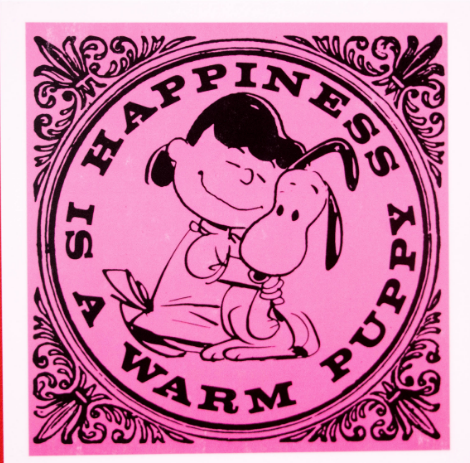
"The bus passed a poster of the Shultz cartoon character, Charlie Brown.

"The poster had a caption that began ‘Happiness is…’, taking this in, Tim settled back in his seat and said ‘Happiness is a dry cigarette on the top deck of a 134 bus’.

"The pair soon realised that if they changed what Tim had said to ‘Happiness is a cigar called Hamlet’, and put a suitably funny, but unfortunate event or situation in front of that line, they might have the campaign they’d been looking for.


"And so it proved."

Finally, as my daughters so often tell me, get over yourself.

When my wife and I went to the Van Gogh museum in Amsterdam, I learned something that I lean on a lot. 

Vincent painted 77 paintings in the last 70 days of his life. As an old friend used to curse, 'fuck me with an iron rod.'

In other words: 

Don't think, do. 
Don't perfect, be. 
Don't judge, play.

I'm not sure any of this answers the questions I set out to answer.

But it's 9:47 now.

And I have a post for tomorrow.


Wednesday, February 15, 2023

Joe Louis and Me.


As someone who's spent a lifetime battling the ever-worsening effects of chronic depression, I've learned a few ways through the years to attempt to break the downward spiral and find some sort of equilibrium.

I don't expect wives, or kids, friends, therapists or anything else to help when I am in emotional arrears. Very few people, unless they have depression understand depression. And of the one-hundred or so things people toss out there to bolster you approximately one-hundred-and-one make you feel worse. 

David Brooks in last week's New York Times had an excellent column about a lifelong friend of his who killed himself. It was called "Losing My Friend Pete." But again, I'm not sure how many people can fathom the pain of depression if they don't actually feel it themselves.

One trick I've learned over the last few years is this: I go to YouTube and I watch whatever form of boxing matches I can find featuring perhaps the greatest heavyweight champion of them all, Joe Louis.

Louis was heavyweight champion for longer than anyone else in the history of the most brutal of sports, for twelve years. His overall record was 66 wins against just three loses. And for the dozen years or so of his heavyweight reign, he fought with unusual frequency. At one point his opponents were unofficially enshrined into something sports reporters called "The Bum of the Month Club." That's right, Louis fought something like 12 times a year. Unheard of activity for about the last 75 years.

In the fight above, an prematurely-old Louis is fighting a superior and very spry "Jersey" Joe Walcott. Walcott is taunting Louis, dancing around him. He knocks Louis on his keister early in the fight. And dances around Louis in a manner that presages the antics of Muhammad Ali twenty years later.

What I love about Louis is this. No matter what or who is hitting him, no matter the pain or fear he is facing, his visage remains stoical and his pugilistic style remains immutable. In his resoluteness, Louis is unlike anyone else I've ever seen. He is unshakably him. 

When he gets knocked down, as we all do, he gets up. Which we don't all do. We don't all try.

And he does what he does. 

He inches ever forward. Slowly, inexorably forward. In fact, through all the fights I've seen him fight, even in his final fight when Louis at an old 37 lost to undefeated 28-year-old, Rocky Marciano, I'm not sure I ever saw Joe Louis back-up. Louis always seemed to be inching forward, literally like an inchworm. First his front foot would move a bit, his back would catch up and again and again. He moved like a tectonic plate. Unstoppable.

I look at Louis when I am sad, which is not unusual. I watch him for his utter persistence. For his ability to not deviate from what got him to the top. For his dedication to not losing his head when hit in the head, or even being knocked down. And for his savage response when he sees the smallest opening, the slimmest advantage. He leaps at it, but without hurrying.

I read something not long ago by an economist--a long way off from the squared circle and the Marquees of Queensberry. He remarked on one of the great maladies of both our era and our business. I'll call it the "touchdown-run effect."

If you go to a ballgame and there's a spectacular play that takes a few seconds to unfold, everyone will stand up to get a better view of the play. The thing we should notice about that is that by everyone standing up, no one gets a better view. Everyone's ability to see the action is exactly the same as if everyone stayed seated in their seats.

In the world and in advertising, we do the same thing. We leap on the new, the celebrity voice-over, the hot director. We leap on some new technique, chat gpt, anamorphic lensing, whatever is hot and the latest to give ourselves an edge. But by the time we do, everyone else has done the same as well. Our edge, our rushing to the front of the line has been obviated by everyone else rushing to the front of the line as well.

Very few people--and even fewer organizational entities--have the wisdom of a Joe Louis.

Most leap and grasp at the new new thing. No matter how ephemeral and vaporous it is.

I could do the same looking for a way to manage the depression that plagues me--a depression that was exacerbated by being insulted and discarded by the agency I gave a quarter of my life to. However, I know there are no straws worth grasping at. I'd rather find an internal steadiness that although slower than breakthrough is a lot more viable and a lot more reliable.

This involves my core of un-fair-weather friends. This involves self-appreciation. This involves this discipline of work work and more work.

I am not a boxing fan. I've been to just one professional fight in all my life. And I haven't used my fists with intent since a bar-fight against a kid two classes ahead of me in college, a southpaw who went on to be drafted by the Yankees but never got north of Ft. Lauderdale. 

I won. At least I think I did.

But when I look at old films of Joe Louis, I don't see corruption, violence or brain-damage of boxing. I don't see two men fighting each other. 

I see one man fighting for his life. I see one man sticking to his code.

That's a man I can relate to.

As an old boss told me once: I try all things. I achieve what I can.


Tuesday, February 14, 2023

I Think We Forgot How.


I spent a lot of time over the last few days watching commercials. Not because I was watching television. I scarcely watch any TV at all anymore--though out of force of habit, between my two houses, I pay close to $6000/year just for the chance to be bombarded by 497 channels of home shopping network and commercials mixed 75 decibels too hot. 

Of course, those extortionate fees for cable are an integral part of the control giant monopolies have over most of our lives. The cable and ISP providers being among the most pernicious. The worse their service gets, the more hidden and obnoxious their fees. The more you need them, and the more they charge. 

None of that. 

I watched most of the commercials that were on Sunday's football game. There were a few that were good, funny and memorable. But more that were rife with noise and spectacle and celebrity that seemed to be lacking anything close to what Bernbach called, simple, timeless human truths. 

So, I went back in time. Not for nostalgia's sake. Or to reminisce. But to try to find where we lost our way.


First, Saturday night I finished a new, and heavily-reviewed book "The Wandering Mind: What Medieval Monks Can Tell Us About Distraction" by Jamie Kreiner. (I'm forever looking for ways to be better at my job. And getting noticed and fighting distraction are two of them. It staggers me that I seem to be the only one left in the industry who thinks about things like this.)

Kreiner's book is a look at distraction from the habits of the people reputed to be the most focused of all: monks from early Christianity, say 300 AD to about 900 AD, when all hell broke loose, like madrigals and the Book of Kells.

Then I spent 13 minutes watching commercials of the sort I grew up with. Commercials from the early and mid-1970s. Of course, some of these are sullied by imagery that we would today considered marred by sexism or racism, but that's not what this is about. This is about the ancient techniques used to get people to pay attention and remember what they've seen in the service of selling a product.

This is about 'anti-distraction.' It's about messages that register, and take-over a place in your brain. Some of the effectiveness of these 50-year-old spots was contingent on their repetition--we had only three major TV channels back then. But at least as much was because the creators of these spots seemed to focus on repetition within the spot, mneumonics, product shots, rhymes and jingles.

All these effectiveness tools are disparaged by the ad industry today. We put less stock in creating something that's memorable and effective than in creating something that no one actually sees but will be awarded by the judges in Cannes. 

Not too long ago, I presented some work to a major private equity firm with about zero-percent unaided awareness. I did good work. Then did an extra campaign--a campaign that would have gotten me fired from virtually every agency in America because it did something as semantically-sticky as Ogilvy's old, "well, my broker's E.F. Hutton, and when..."


We don't do work that worms its way into memories now. We do farts in a windstorm. That was largely what was played on the Super Bowl. Giant events, laden with unknown celebrities that will last as long as a pdf of George Santos' resume. 

I watched those Super Bowl commercials on Thursday. It's Sunday morning now, and I remember Anytime Fitness and Goodby's Doritos spot. At the very least each of those exploited something unique and intrinsic about the brands they were advertising.


If you want to learn something about the human brain, and to use that knowledge to do your job better, you might want to take 33-minutes and six-seconds to look at this documentary on an English ad man you've never heard of, John Webster.

Don't look at production values, or anything else our overly-contemporary minds can disparage with a simple imprecation that Webster is "dated." 

No, look at these as a 4th Century monk might have.

How they use memory devices. How they establish empathy. How they make you laugh. They don't sensory overload. Like a good story, they bring you in with the unusual.

I think we've forgotten how to reach people other than award judges and chief creative officers.

I think that is among the top ten reasons advertising doesn't work and advertising as an industry has been relegated to the fringes of business. We've lost our seat at the table. We lost our ability to charge for our services. We lost our ability to "think different." And sell more.

I think we've forgotten common sense. Bernbach's words.

We embrace something called "culture." All too momentary popular gimmickry, devoid of empathy and meaning.

We've become ..."A tale/ Told by an idiot, fully of sound and fury/ Signifying nothing."

That's Shakespeare. 

Too many consider it a brief.


Monday, February 13, 2023

The Long Game.

My best friend of more than 50 years, Fred, died around his 64th birthday--about 15 months ago. As you'd expect from people who had been friends from their girl-riven ninth-grade years, through high school, college, marriage, children, careers, and old age, Fred and I got along. 

We agreed on most things.

Even if we began a conversation disagreeing, after some time, I could see things Fred's way, or he could see things mine. We might not have been completely persuaded by each other's arguments, but at least we could see the other side and see the 'reason' of an alternative viewpoint.

The central thing Fred and I disagreed with over the last few years was watching sports on TV. I'm writing this on the Saturday before Super Bowl Sunday and once again, and Fred and I would fight about this, I will not watch the game.

I won't watch for a simple reason.

The game is being broadcast on Fox. And the money the game earns Fox supports their radical right, racist, anti-woman, climate-change-denying, anti-CRT agenda. 


Every minute you watch something on Fox puts money in Tucker Carlson's pockets. And all the other Crypto-Goebbels who clog the public trust that are America's airwaves.

The ad industry does a lot of lip-flapping about a whole host of liberal values, including Diversity, Equity and Inclusion and working toward reversing global warming. And then we funnel literally billions of dollars in the form of our clients' media budgets to the biggest threat of all to what had been America's democratic institutions.

I had a long dialogue not long ago with the chief of one of the world's biggest agencies. I maintained we should be steering our clients away from Fox, OAN, Newsmax and Sinclair. He said that was not our job.

We will never agree.


About three decades ago, Daniel Jonah Goldhagen, turned the scholarly world on its ears with a book called "Hitler's Willing Executioners: Ordinary Germans and the Holocaust." You don't have to read the book to understand the thesis. The masses of people placidly accept corruption.

I refuse to be "Tucker's Willing Executioner." 

So I abjure Fox.

Fred loved sports. He was a great basketball player as a kid--he could have played at Brown, where he went to college, but focused instead on grades. He played throughout his time at Columbia Law, and when he joined New York City's District Attorney's office, he played on their squad. From what I gather, it was a pretty talented five.

Later on in life, Fred ran marathons. And then took up golf. As he convalesced after numerous cancer treatments he watched a lot of sports. While he was hospitalized I'd send him books on sports. We never lacked things to talk about, but we enjoyed reading these two together. They brought us back to our youth and reminded me of A.E. Housman's "To an Athlete Dying Young." [Below. And worth reading aloud.]


Fred and I enjoyed "City" by ex-New York Times writer, William Rhoden, with a forward by Walt "Clyde" Frazier. We spent a lot of time talking about Lew Alcindor, now Kareem Abdul Jabbar, and the great photos of him as a teenager in 1960s New York shot by the unsurpassed Richard Avedon. We had hours of conversation about this photo, of Mr. Jabbar, then Lew Alcindor taking the subway home from practice, while wearing his Power High varsity letter jacket. How innocent it all seems today.


We also loved "The Baseball 100," by Joe Posnanski, a look at the one-hundred greatest to ever play the summer game. 

What makes Posnanski's book different and better than any similar "bar-argument" book of rankings is that Posnanski, to my eyes, is the first writer to dig deep and consider the achievements, accomplishments, skill and sufferings of Black and Latin players who were banned from so-called major-league baseball, until drip-fed integration began in 1947. (I say drip-fed, because for instance, the Red Sox didn't integrate until 1960.)


Fred would have watched yesterday's Super Bowl 57. I did not. 

Fred would say to me, "Bomber, life's too short to be so angry." 

I'd say, "Earl, life's too short not to be so angry."

We'd both be right.

--

To an Athlete Dying Young

The time you won your town the race
We chaired you through the market-place;
Man and boy stood cheering by,
And home we brought you shoulder-high.

Today, the road all runners come,
Shoulder-high we bring you home,
And set you at your threshold down,
Townsman of a stiller town.

Smart lad, to slip betimes away
From fields where glory does not stay,
And early though the laurel grows
It withers quicker than the rose.

Eyes the shady night has shut
Cannot see the record cut,
And silence sounds no worse than cheers
After earth has stopped the ears.

Now you will not swell the rout
Of lads that wore their honours out,
Runners whom renown outran
And the name died before the man.

So set, before its echoes fade,
The fleet foot on the sill of shade,
And hold to the low lintel up
The still-defended challenge-cup.

And round that early-laurelled head
Will flock to gaze the strengthless dead,
And find unwithered on its curls
The garland briefer than a girl’s.


Friday, February 10, 2023

The Pride of Agencies.


You've heard of a pride of lions, a murder of crows, a parliament of owls, maybe even a bloat of hippopotami. This blog decided we need collective nouns for the advertising industry, too. Of course we missed some. We're just one person, and don't have a sarcasm of bloggers working for us.


Thursday, February 9, 2023

Arms and the Mantra.

One of the big differences between working for an agency and working independently--that is, alone--is the lack of ballast. When you work in an agency, you usually have a partner, a neighbor, an account person, a planner, a supervisor, a supervisor's supervisor or a supervisor's supervisor's supervisor to tell you the work is good.

That's how work gets approved. Via a long-multi-presentation process.

If I were to be cynical about it, I'd say that this validation rigamarole can be something of an echo-chamber. There are very few people who will throw a monkey, a wrench or a monkey wrench in the works once something has momentum behind it.

The best places, in fact, have no such "amen corner." There's always someone, usually at the highest echelon, who can spot something that's amiss.

All that means is that by the time the work is ready to go to the client it's gone through 14 or 49 rounds of checks and quadruple checks. It's gone through the gauntlet to such an extent that you, nominally the progenitor of the work, can have some confidence in presenting it. After all, everyone and his cousin said it was good.

Now that I work alone, the loft of my client list has actually risen. I rarely present to anyone who isn't a founder, CEO or CMO. And the companies I work for, while they're not often the largest in their sector, are very often well-thought-of and prestigious. As my mother would say, "they're not schmendriks. Why did they hire you?"

And therein lies the rub.

The rub of talking to a financial firm with over one-billion-dollars in revenue, and it's just me.


I suppose no matter who you are or where you are in your career, you can find a way to feel this way. With all due respect to Allan Sillitoe, I call it "The Loneliness of the Long Distance Writer."

I'd imagine I'd feel similarly if I were a comic doing a monologue. No matter how much I had road-tested my jokes. Who knows what's going to land, and when. Likewise, the first time I presented to Hall-of-Famers, Ron Rosenfeld and Len Sirowitz, or Hall-of-Famers, Amil Gargano and Mike Tesch, I was like the Ancient Mariner, stopping one in three and looking for encouragement.

The highest hurdles for me were presenting--after working on hundreds of scripts alone--to Steve Hayden. That he was always kind and soft spoken--he was never a 'screamer,' that only made presenting to him more intimidating. Even after having worked for Steve over much of the last 25 years, I'm still not over my jitters.

It occurred to me as I was presenting this morning that regardless of nerves--an issue I've been dealing with my whole life--and will deal with the rest of my life--I have taught myself to a few tricks to get screw my courage to the sticking place.

When I was a ballplayer--a ninth-grader on a high school varsity team--I was initially over-matched by some of the better pitchers in the league. I was a young 14, and I hadn't seen that many "benders" in the course of my baseball career. I realized early-on, I was having trouble with curveballs.

I taught myself something. 

Rather than moving back in the batter's box--to give my self a split-second longer to see the pitch--I moved as far-forward as possible, as close to the pitcher's mound as I could get, obliterating with my spikes the front chalk of the batter's box. My thinking was to lash at the pitch before the ball started its break. That is, attack it. Rather than let it attack you.

With that, a bit of my mantra-izing. The things I've learned to tell myself along the way. Some times these work. Some times they work less.

1. Attack it. Rather than let it attack you. [Never dawdle. Never procrastinate.]

2. Hit the send button. [Believe in yourself enough to share your work. It won't get better the longer you wait.]

3. Your good is other people's great. [Keep your standards high. But don't expect yourself to be perfect.]

4. Keep working even after it's sold. [Don't overwork, but breathe and look at the work when you're not stressed out over it.]

5. Always give a bonus. [Once you're done with the "musts" of the assignment--allow new unasked for ideas to flower. I believe there is a difference between 'doing the assignment and doing the job.' Assignments are limited; jobs are whatever makes the work better.]

That's enough for now.


Wednesday, February 8, 2023

AI and U.

Greg Hahn of Mischief fame and acclaim and I have never met. We left our big agency jobs (Greg's was way bigger than mine) around the same time and via similar sets of macro-economic circumstances.  That is, our agencies didn't want to pay for talent anymore.

Two years ago, I wrote to Greg and asked him if he wanted some space in this space for a blog post. He kindly said "yes." And responded with this post. You can learn a lot from Greg. And should.

Along the way, Greg's agency Mischief has become the envy of just about every creative in the world and perhaps a thumb in the eye of so many agencies who believe in quantity over quality and tonnage over "stun"-age. Greg and his people do great work. It's great and therefore gains an outsized share of attention for the brands he works for.

Over the last few days we've all been assaulted by hype around the power of whatever specific AI someone is flogging and the changes it will bring to marketing and, of course, our jobs. I've read tons about the technology's capabilities and its writing and thinking abilities. 

What I haven't read or even seen are anything but hosannas. Is anyone considering these questions?

1.     Have you ever gotten customer service satisfaction from a         bot or a computerized voice system?

2.    Have you ever gotten a "data-driven" marketing message           that was really relevant, not borrowed-interest or pandering        relevant?

3.    What percentage of marketing messages do you ignore?

4.    What percentage of marketing messages do you find                   annoying?

5.    Do you like when brands are always-on, and therefore               always sending messages to you?

6.    Do you want more messages?

7.    Or better messages?

If you're like me, god forbid, and you believe as most neuro- scientists and psychologists do, that humans have 'ancient brains,' you probably believe that most people aren't looking for more messaging they're looking for more fun. Or more meat. Or more information. Not just more more.

I'm not saying AI is without value or utility. It can spur ideas from humans--but don't ask it to have ideas.

What's more, no one has yet said, and I've yet to see, a computer make something fun. Or weird. Or something that makes me want more.

That brings me back to Greg Hahn. And his post on Linked In yesterday morning--which is about getting more bang for your clients bucks. (Or as Bernbach put it, “It may well be that creativity is the last unfair advantage we're legally allowed to take over our competitors.”)

This morning Greg's LinkedIn feed pointed me in this direction. It seemed like there might be something worth reading. Because creativity is the art, in a sense, of getting attention amid the clamor of the world. So I clicked the requisite clacks.

Those clicks got me here.

Which brought me here. Where I watched these. Enjoyed these.


And these spots left me with a question.

Can AI do this? No seriously. Can AI make wine or just fill bottles with crap?

And, maybe more importantly, what is the purpose of marketing? To send out so many messages people eventually submit and crumble under the weight of your billions? Or to create something likable so people join you?

How would AI respond to this:

P.S. I'm not trying to get work from Mischief. I don't suppose they could afford me. (Though they could try.)


Tuesday, February 7, 2023

SInking.

As my wife is in the long, winding and expensive process of unramshacklizing our ramshackle covid cottage two-hours out of Manhattan on Connecticut's schrunchy-strewn Gingham Coast, it's fallen upon me--not only to work until the veins in my temples are pulsating out--but to accompany her as we make the vitally important decisions those foolish-enough to re-do a house have to make.

On Saturday morning after scarcely five hours sleep we were up at 7, in -10-degree weather and off for a nine-AM appointment with Chloe who is to expensive tile what Carroll Shelby was to muscle car engines. Chloe's place is called American Tile, presumably because the store itself is three-quarters the size of America and crammed to the dropped ceiling with every kind of tile imaginable, except that which you had your heart set on.


Call me a cretin, you won't be the first to do so. But once you get down to it, choosing between matte and flat or pure white or off white reminds me of sweating in an agency at 3AM, waiting for a "perseverance of art directors" (the official name of a group of art directors) to decide whether the campaign the client will never buy should be set in Helvetica Neue or just Helvetica.

As anyone who's ever been within axe-length of me knows, my furrowed brow turns into a superciliary arch, my lower jaw juts prognathously, and my knuckles scrape the carpet tiles when hours and hours are wasted on decisions that mean nothing. 

I'd wager that no one in the history of our benighted species has ever on his deathbed said, "It all would have been worth it is I only bought the matte-finish herringbone."

From American Tile we drove through what had been battlegrounds, millennia ago between the Mohawk and the Pequot, till good ol' European cowpox killed them all, where we found American Sink, Toilet and Tub, a warehouse roughly the size of the Titanic, only more deadly.

There, with another otiose woman name Chloe or Kelly, we labored over another set of decisions of utmost gravity. Where do we want to wash, brush, shit and shave, and how many possible variables can there be and why are they all so damned expensive.

I couldn't help but thinking the whole time I was in the rest-room equivalent of the Bataan Death March, that there are parallels--a lot of parallels--to the ad business, such as it is today.

Too many things to choose from that add twenty-seven levels of complexity for each tiny notch of intention. Everything has gotten entirely too deliberate, too fussy, too rife with important decisions, too expensive and too slow, all for marginal material effect. 

As I regularly said, again at three in the morning as we labored on pages 58-128 of a creative presentation, from which nothing was bought--ever--after page 21, "we spend eleven cents getting the last dime out of clients."

I know, philosophically speaking, it's heretical to quote Jeremy Bentham and his Utilitarian credo, but I'm all for doing the "greatest good for the greatest number."


As Rick Nelson sang before anyone reading this was born, "you can't please everyone, so ya got to please yourself." In other words, stop trying to do something that will appeal to every conceivable segment of the population without pissing anyone of those 39-trillion segments off. It's all too impossible to do anything or get anything done. And not pissing anyone off very much gets in the way of doing anything decent in the first place.

Last week, after having seen about 394-quadrillion fucking posts about the splendors of AI and the massive second-coming-ness of its advent, I posted this on Linked In:


It quickly got about 30,000 views, which isn't bad for anyone not named Sinek, Godin or Vaynerchuk. Then someone wrote this comment:


Quickly followed by this one:


My point in all this is simple. 

Our world and our business is falling apart because we're trying to construct a world where no one ever has to settle for anything that requires adjustment, compromise, mitigation of obsession or, even looking something up.

What we're left with is 927 soaps in the grocery store, 1727 channels on the "connected" TV that tracks your eye movements and 14-trillion opportunities for some oligopoly company to upsell you on something you didn't want in the first place.

I know I'm an old man howling at the moon. 

But I'm tired of all the fucking choices, all of which suck. 

I went to a ball game with a friend a couple summers ago. An opportunity to kibbitz, have a beer and spend an afternoon just goofing off. The game was, like all games now, at a multi-billion dollar tax-payer-financed stadium with a bank's name on it.

I grew up in a world where at the ball game there were five things you could eat or seven. A lukewarm boiled frank, peanuts, crackerjack, beer or coke. Maybe an ice cream sandwich, mostly melted.

Now there are more food choices at a baseball stadium than there are in most European countries.

I just don't see how any of this makes the world better. Just more enervating.

And it's almost impossible to find a good hotdog.